



What's Happening?
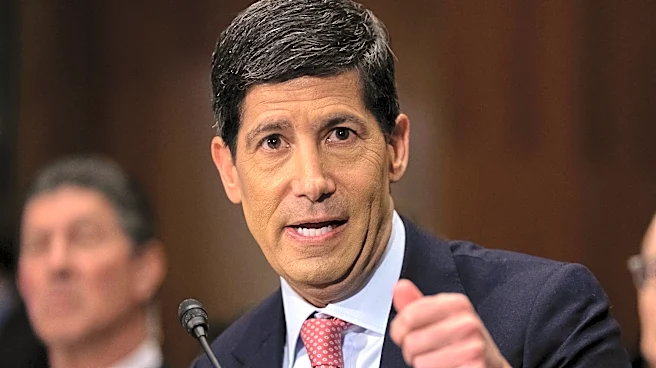
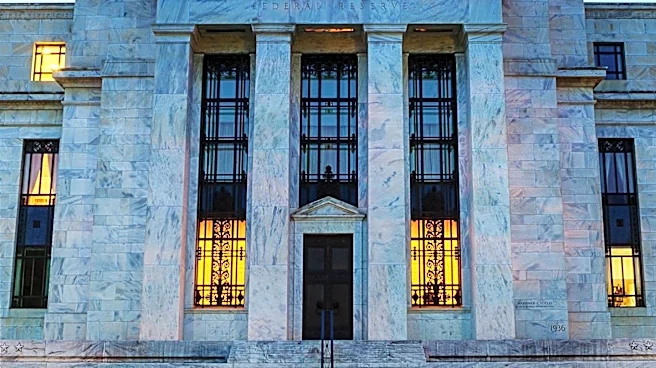
The Federal Reserve decided to keep interest rates unchanged in the range of 3.50% to 3.75%, a move described as a 'hawkish hold' due to the potential for future rate hikes. This decision, which included three dissents from the 12-member panel, has left
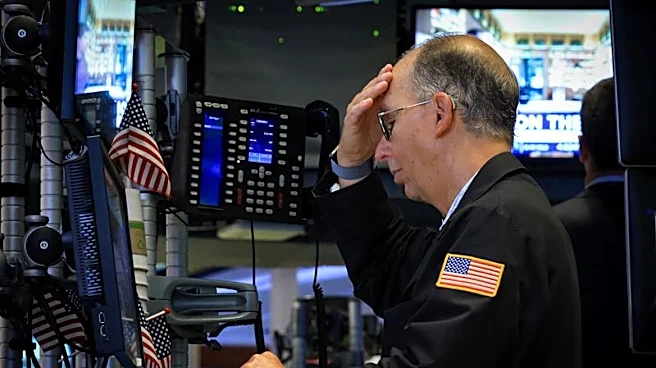
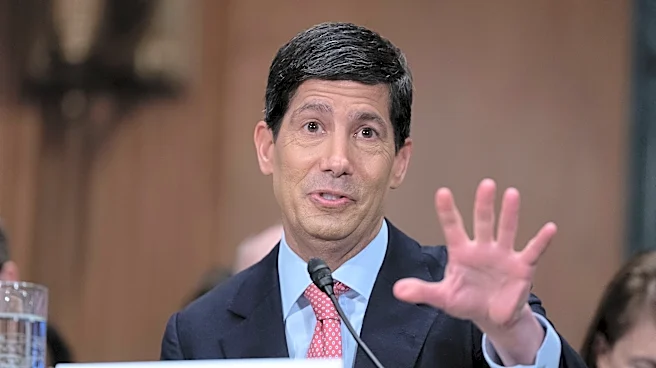
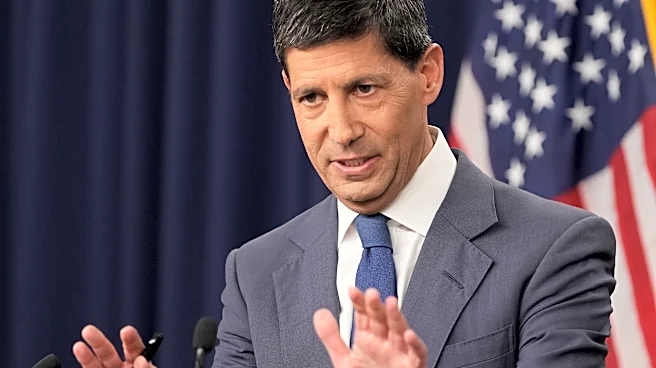
investors uncertain about the Fed's future actions. The lack of forward guidance from the new Fed chair, Kevin Warsh, has led to increased market volatility as investors now rely on economic data to predict the Fed's next moves. The decision comes amid slowing U.S. consumer inflation, which remains above the Fed's 2% target, and renewed U.S.-Iran tensions that could drive oil prices higher.
Why It's Important?
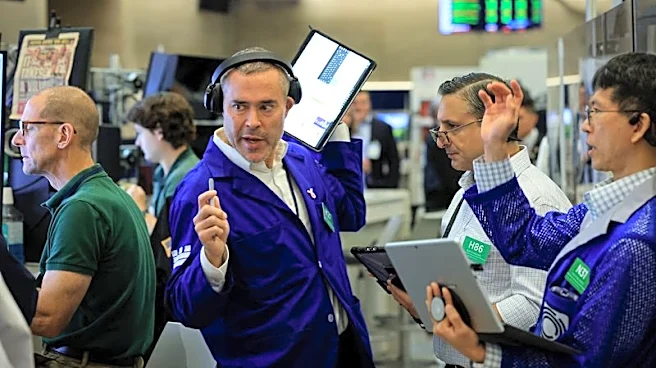
The Fed's decision impacts both the stock and bond markets, with the potential for prolonged elevated borrowing costs affecting investment strategies. The uncertainty surrounding future rate hikes could lead to increased market volatility, as investors adjust their expectations based on economic data. This situation highlights the challenges faced by the Fed in balancing inflation control with economic growth, especially in a geopolitical climate that could exacerbate inflationary pressures.
What's Next?
Investors will closely watch upcoming economic data releases for clues about the Fed's future actions. The possibility of a rate hike in September remains, with futures markets indicating a fluctuating probability. The Fed's approach under Warsh suggests a shift towards market-driven expectations, which could lead to sharper market reactions to economic indicators. Stakeholders will need to navigate this new paradigm, balancing risk and opportunity in a potentially volatile environment.