








What's Happening?
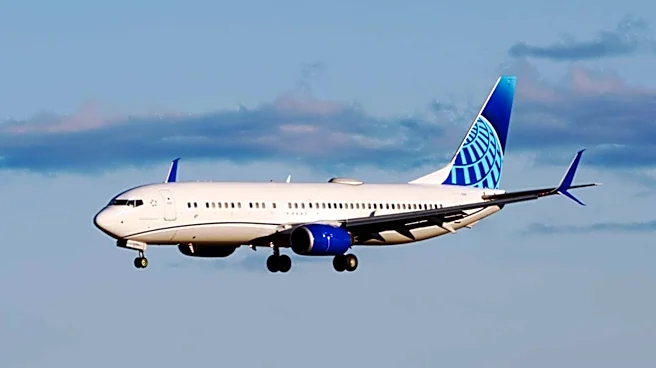
United Airlines is set to resume service to Chihuahua Airport (CUU) in northern Mexico from Houston’s George Bush Intercontinental Airport (IAH) starting March 28, 2027. This expansion comes despite warnings from United CEO Scott Kirby about potentially
cutting unprofitable flights in 2027 if fuel prices remain high. The route will utilize a Bombardier CRJ-550 aircraft, configured with 10 first-class, 20 extra-legroom economy, and 20 economy seats. This addition is part of United's broader strategy to grow its network, which includes new routes from San Francisco and Chicago, while also making some cuts, such as ending service to Tulum International Airport in Mexico.
Why It's Important?
United Airlines' decision to expand its international network, particularly to a destination like Chihuahua, Mexico, signals a strategic move to capture growing demand in specific markets despite broader economic headwinds like high fuel costs. This expansion can bolster economic ties between the U.S. and Mexico, facilitating business travel and tourism, which benefits both economies. For United, it represents an effort to optimize its route map for profitability and market share, demonstrating a nuanced approach to growth that balances new opportunities with cost management. The use of a reconfigured regional jet for this route also highlights airlines' efforts to tailor aircraft capacity to specific market demands, maximizing efficiency and passenger comfort on regional international flights.
What's Next?
The success of the new Houston-Chihuahua route will be closely watched by United Airlines and the broader industry as a test case for strategic international expansion amidst fluctuating fuel costs. If successful, it could lead to further route additions to similar markets. Conversely, if fuel prices continue to climb or demand falters, United may revisit its capacity decisions, potentially leading to adjustments in its network. The airline's ongoing evaluation of profitability for each route suggests a dynamic and responsive approach to market conditions, which could see more route changes in the future as it seeks to optimize its global footprint.
Beyond the Headlines
This move by United Airlines reflects the delicate balance that carriers must strike between growth ambitions and financial prudence in a volatile global economy. The decision to add a route while simultaneously cutting another underscores a highly analytical approach to network planning, where each route's profitability is under constant scrutiny. It also highlights the increasing importance of regional international travel, as airlines seek to connect secondary cities and tap into niche markets. This strategic agility is crucial for airlines to navigate economic uncertainties and adapt to evolving passenger demands, ultimately shaping the future of air travel connectivity between the U.S. and its neighbors.