

What's Happening?
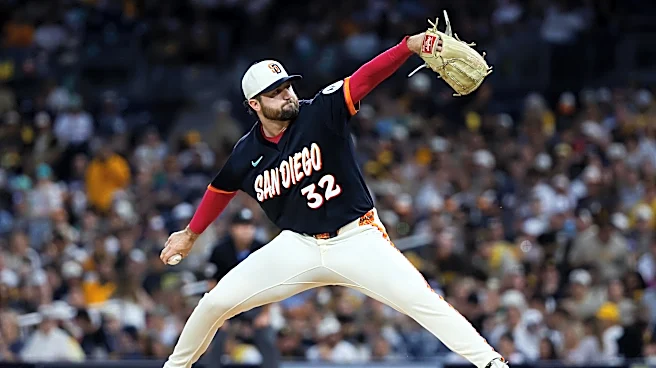
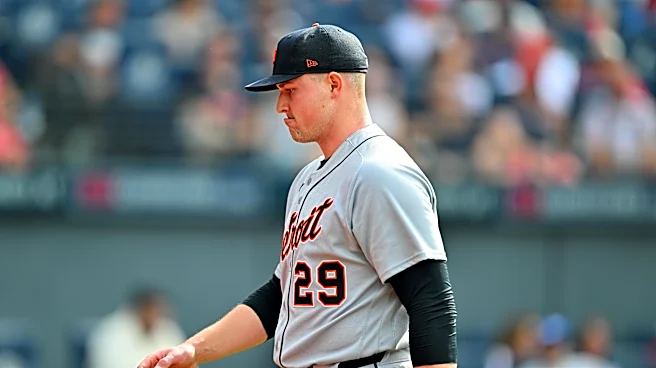
The San Diego Padres' trade for pitcher Casey Mize has been assessed as a failure following his performance in the 2026 season. Mize, acquired from the Detroit Tigers, struggled significantly after joining the Padres. In 10 starts, spanning 44.2 innings,
he posted a 7.46 ERA, a 1.68 WHIP, and allowed opponents to bat .306 against him. This performance stands in stark contrast to his time with the Tigers, where he was considered a solid pitcher with a 3.87 ERA in 2025. The Padres gave up Kash Mayfield, their No. 2 prospect, and Jackson Wolf in the trade, also acquiring infield prospect Gage Workman. Mize was a rental player and is now a free agent, making his tenure with the Padres largely unproductive despite the initial high hopes for bolstering their starting rotation.
Why It's Important?
This situation highlights the inherent risks in player trades, particularly for rental players where immediate impact is crucial. For the Padres, the failure of the Mize trade means they expended significant prospect capital—Kash Mayfield was a highly-rated prospect—without receiving the expected on-field returns. This can impact the team's future competitiveness by depleting their farm system while not improving the major league roster. It also raises questions about player evaluation and medical assessments, as there was a prevailing belief among scouts that Mize was pitching through a groin injury, which could have affected his performance. Such failed acquisitions can influence future trade strategies, making teams more cautious about trading top prospects for short-term solutions, especially if there are underlying health concerns.
What's Next?
With Casey Mize now a free agent, the San Diego Padres will need to re-evaluate their pitching rotation for the upcoming season. The team will likely focus on other avenues to strengthen their pitching staff, either through free agency or by developing existing prospects. The departure of Mize, coupled with the free agency of other pitchers like Michael King and Nick Pivetta, indicates a significant need for pitching acquisitions. The Padres' front office will face pressure to make more effective personnel decisions to ensure the team remains competitive. The outcome of this trade may also influence how the Padres approach future trade deadlines, potentially leading to a more conservative approach when considering trading away high-value prospects for rental players.
Beyond the Headlines
The Mize trade's outcome underscores the complex interplay of player health, performance expectations, and organizational strategy in professional sports. While the Padres aimed to bolster their rotation, the unforeseen struggles, potentially linked to injury, demonstrate that even well-intentioned moves can backfire. This scenario also touches upon the broader discussion of player value and the pressure on athletes to perform through injuries, which can have long-term career implications. The trade's failure could lead to a more introspective look within the Padres organization regarding their scouting and medical evaluation processes for incoming players, especially those acquired via trade. It also serves as a cautionary tale for other teams considering similar high-stakes trades for players with potential injury concerns.