









What's Happening?
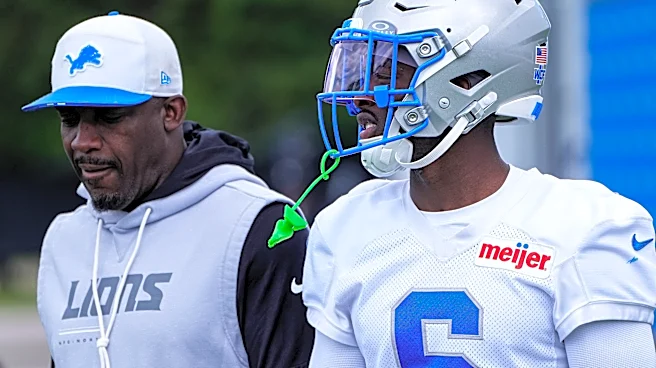
The Detroit Lions, under the leadership of coach Dan Campbell, are continuing their high-intensity training camp practices despite facing criticism and concerns over player injuries. Campbell has been known for his rigorous training methods, which include
live tackling drills. This approach has drawn criticism from figures like 49ers linebacker Fred Warner, who questioned the necessity of such practices. Despite the criticism, Campbell remains committed to his methods, emphasizing the importance of tackling and pursuit in improving the team's defensive capabilities. The Lions have been one of the most injury-prone teams in recent years, ranking low in the 'Adjusted Games Lost' metric. In response to these concerns, the team has made some adjustments, such as eliminating rookie minicamp and opting out of joint practices, but Campbell insists on maintaining a challenging training regimen to prepare players for the season.
Why It's Important?
The Lions' approach to training camp is significant as it highlights the ongoing debate in the NFL about the balance between rigorous training and player safety. High-intensity practices can potentially lead to more injuries, which can impact team performance and player careers. The Lions' decision to continue with such practices despite their injury history could influence other teams' training strategies. Additionally, the team's performance in the upcoming season will be closely watched to see if Campbell's methods yield positive results. The outcome could affect Campbell's reputation and job security, as well as the team's long-term strategy regarding player health and training intensity.
What's Next?
As the Lions prepare for the upcoming season, they may face increased scrutiny from both fans and analysts regarding their training methods and injury management. The team's performance in preseason games, where Campbell plans to play more starters, will be an early indicator of the effectiveness of their training approach. If injuries continue to plague the team, there could be calls for further changes in their training regimen. Conversely, if the team performs well, it could validate Campbell's methods and influence other teams to adopt similar practices.