






What's Happening?
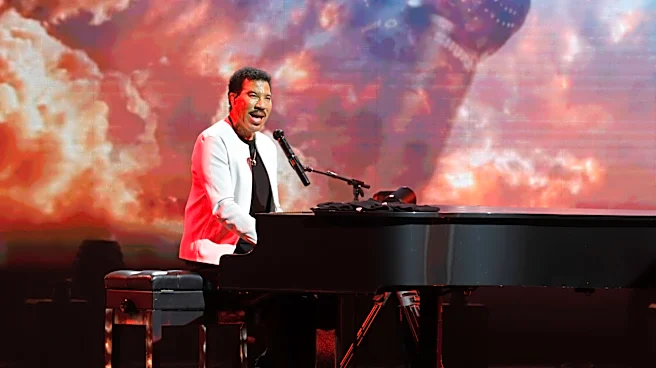
Lionel Richie, the Grammy-winning artist, was forced to cut short the opening concert of his 'Sing a Song All Night Long Tour' in Minnesota due to a health issue. During the performance, Richie experienced dizziness and had to sit down while performing
his hit 'Dancing on the Ceiling.' Despite attempting to continue with the ballad 'Three Times a Lady' at a grand piano, he announced an intermission and did not return to the stage. After a delay, it was announced that Richie was not feeling well enough to continue. The incident occurred just over halfway through his set, and he was reportedly sweating heavily, possibly due to dehydration. The tour, which includes Earth, Wind & Fire, is scheduled to continue with upcoming performances in Chicago and Columbus, Ohio.
Why It's Important?
The abrupt cancellation of Lionel Richie's concert highlights the physical demands placed on performers, especially those of advanced age. At 77, Richie is part of a generation of musicians who continue to tour extensively, raising concerns about the health risks associated with such rigorous schedules. This incident may prompt discussions within the music industry about the need for better health management and support for aging artists. Additionally, the cancellation affects fans and the tour's financial aspects, as ticket holders may seek refunds or rescheduling. The situation also underscores the unpredictability of live events, impacting concert promoters and venues that rely on these performances for revenue.
What's Next?
Lionel Richie is expected to resume his tour with scheduled performances in Chicago and Columbus, Ohio. However, his health status remains a concern, and any further cancellations could affect the tour's overall success. Fans and industry stakeholders will be watching closely for updates on Richie's condition and any potential changes to the tour schedule. The incident may also lead to increased scrutiny of health protocols for performers, particularly those with demanding tour itineraries. Concert organizers might consider implementing more robust health checks and support systems to prevent similar occurrences in the future.