



What's Happening?
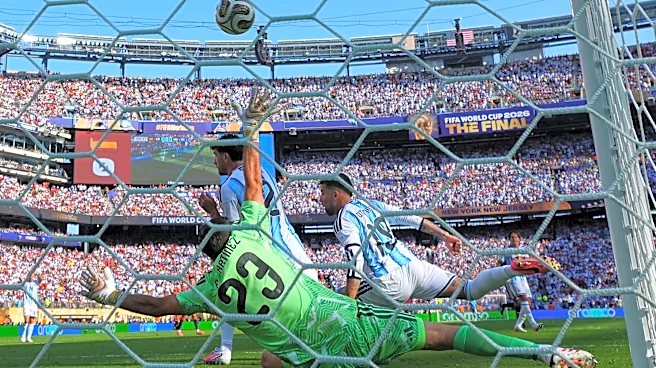
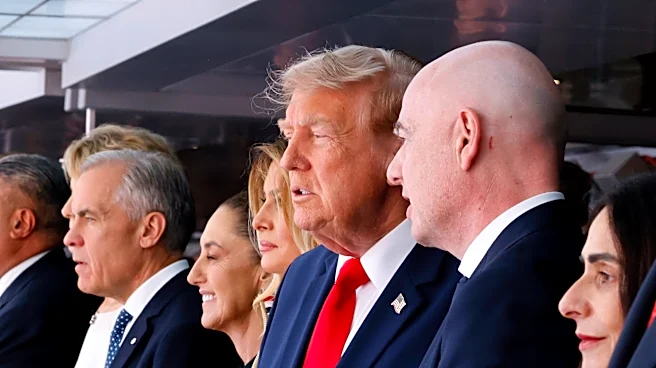
The 2026 World Cup marked the first tournament with an expanded 48-team format, a decision made shortly after Gianni Infantino became FIFA president. The expansion aimed to increase global participation, with Africa and Asia benefiting from more qualifying
spots. While the format allowed for diverse representation, it also led to disparities in team quality, with some matches showing significant gaps in competitiveness. The tournament's structure, which included a controversial third-place system, raised concerns about potential collusion and competitive fairness.
Why It's Important?
The expansion to 48 teams reflects FIFA's strategy to globalize soccer and increase its reach beyond traditional powerhouses in Europe and South America. This move could enhance the sport's popularity in underrepresented regions, potentially leading to increased investment and development in these areas. However, the format's impact on the quality of play and competitive balance remains a concern. The debate over expanding to 64 teams highlights the ongoing tension between inclusivity and maintaining high competitive standards in international soccer.
What's Next?
FIFA is considering further expansion to 64 teams, which would involve additional matches but could address some issues with the current format. This potential change aims to eliminate the third-place system and return to a more straightforward group stage. However, it may also exacerbate disparities in team quality. The decision will likely involve discussions on logistical challenges, such as scheduling and venue capacity, as well as the broader implications for the sport's global growth and competitive integrity.