









What's Happening?
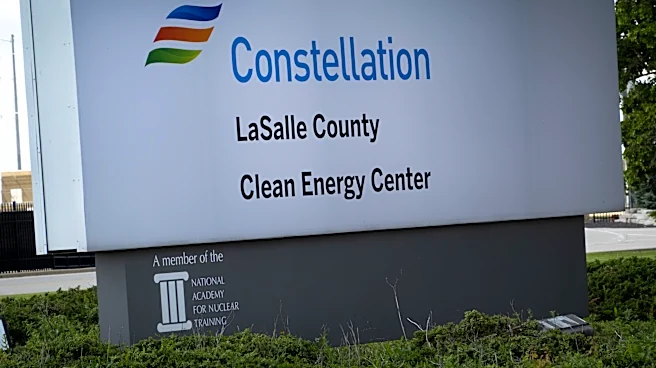
Walmart has announced its first nuclear power purchase agreement to secure emissions-free electricity for its operations in Illinois. The deal involves a partnership with Constellation's Dresden Clean Energy Center, providing Walmart with approximately
176 megawatts of wholesale electricity. This agreement marks a significant step for Walmart, as it is one of the first U.S. retailers to directly contract with a nuclear plant, a move previously dominated by tech companies and data center operators. The agreement aligns with Walmart's climate goals, which include achieving zero emissions across its global operations by 2040 and expanding access to affordable, reliable energy. The electricity will be delivered in two 15-year contract periods starting in 2029 and 2030, supporting Walmart's high-tech perishable distribution center in Belvidere, Illinois.
Why It's Important?
This development is significant as it highlights a growing trend among major corporations to adopt nuclear power as a reliable and clean energy source. By entering into this agreement, Walmart is taking a proactive step towards reducing its carbon footprint and meeting its ambitious climate goals. The move also reflects a broader shift in the energy sector, where nuclear power is increasingly seen as a viable alternative to fossil fuels, particularly for large-scale operations that require consistent and high-volume electricity. This could potentially influence other retailers and industries to consider similar agreements, thereby accelerating the transition to cleaner energy sources.
What's Next?
Walmart's agreement with Constellation is set to commence in 2029, with planned efficiency upgrades to increase output from existing nuclear units. This initiative may prompt other retailers to explore nuclear power as a sustainable energy solution. Additionally, the success of this agreement could lead to further collaborations between nuclear energy providers and large corporations, fostering innovation and investment in nuclear technology. Stakeholders, including environmental groups and policymakers, will likely monitor the outcomes of this agreement to assess its impact on emissions reduction and energy reliability.