






What's Happening?
College radio stations across the U.S. are experiencing a resurgence, thriving as an alternative to algorithm-driven streaming services and the increasing presence of AI in media. Despite the broader challenges faced by terrestrial radio, such as consolidation
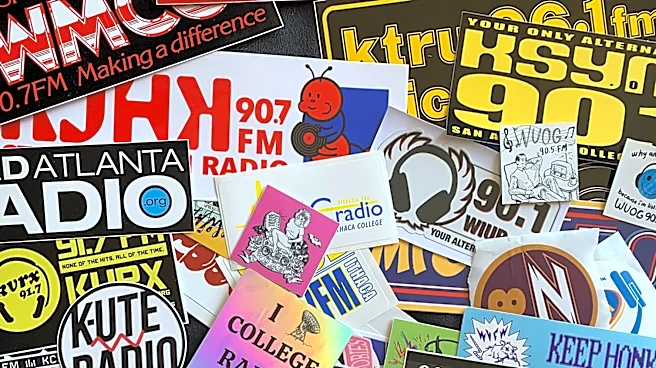
and competition from digital platforms, student-run stations are attracting a new generation seeking authentic, human-curated music experiences and community. Stations like KCPR-FM at Cal Poly San Luis Obispo actively promote themselves as an antidote to algorithms, emphasizing human selection over automated playlists. For students who grew up online and experienced COVID-19 lockdowns, college radio offers a creative outlet and a sense of belonging. Many stations, some with a century-long history, are seeing increased student interest and participation, with packed schedules and diverse programming that spans various genres and cultural themes. This trend highlights a desire for tangible, 'IRL' experiences and a rejection of purely digital, algorithm-fed content.
Why It's Important?
The resurgence of college radio signifies a notable shift in how younger generations engage with media and music discovery, moving away from purely algorithmic recommendations. This trend challenges the prevailing narrative that digital streaming and AI will entirely dominate content consumption, demonstrating a demand for human curation and authentic experiences. For the music industry, college radio continues to serve as a vital platform for emerging artists and niche genres that might be overlooked by mainstream algorithms, potentially fostering diverse musical landscapes. It also provides a unique training ground for future media professionals, offering hands-on experience in broadcasting, programming, and community engagement. The emphasis on community and creative expression within college radio environments can also contribute to student well-being and foster critical thinking about media consumption in an increasingly AI-driven world.
What's Next?
The continued growth of college radio suggests a potential for further innovation in its operational models, possibly integrating more online presence while maintaining its core authentic, human-curated approach. Stations may explore new ways to reach wider audiences beyond campus limits, leveraging digital platforms without compromising their unique identity. We might see increased collaboration between college radio stations and local music scenes, further solidifying their role as community hubs for artistic expression. As AI continues to evolve, college radio could further position itself as a counter-narrative, emphasizing the irreplaceable value of human taste and connection in media. Universities may also recognize the growing importance of these stations as valuable educational and community-building assets, potentially leading to increased support and resources for student broadcasters.
Beyond the Headlines
The thriving college radio scene reflects a broader cultural pushback against the pervasive influence of algorithms and artificial intelligence in daily life. It underscores a generational desire for authenticity, human connection, and tangible experiences in an increasingly digitized world. This movement can be seen as a form of media activism, where listeners actively choose to engage with content that is intentionally curated by individuals rather than dictated by data. Ethically, it raises questions about the long-term impact of algorithmic filtering on cultural diversity and individual taste, suggesting that over-reliance on AI might narrow perspectives rather than broaden them. The 'inconvenience' of seeking out college radio, akin to vinyl records, highlights a value placed on the effort involved in discovery, transforming consumption into a more meaningful and personal experience. This trend could inspire other sectors to re-evaluate the balance between technological efficiency and human-centric approaches.