






What's Happening?
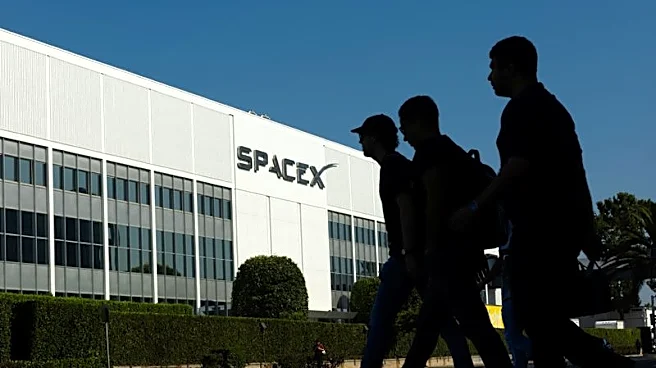
SpaceX, the aerospace company led by Elon Musk, is set to be integrated into major index funds, including those managed by Vanguard and other large money managers. This move comes as Nasdaq and other market indexes like CRSP, FTSE Russell, and MSCI have
made accommodations to include SpaceX within their large-cap trackers. The integration is expected to occur this summer, making SpaceX a part of some of the biggest exchange-traded funds (ETFs) that are staples in many American portfolios. SpaceX's market cap has reached $2.7 trillion, making it the fifth largest company globally. However, its inclusion in these funds is raising concerns due to its high volatility, which is reported to be three times higher than that of the iShares bitcoin ETF. Critics, such as Ayman Saidi from Strategic Investment Solutions, argue that this move could distort the market and betray U.S. savers.
Why It's Important?
The inclusion of SpaceX in major index funds is significant because it introduces a highly volatile stock into widely held investment vehicles. This could lead to increased volatility in the funds themselves, affecting the portfolios of millions of investors who rely on these funds for stable growth. The decision highlights a broader trend of index funds adapting to include high-growth, high-risk companies, which may not align with the traditional risk profiles of these investment products. This shift could have implications for the stability of the stock market and the financial security of individual investors, particularly those who are risk-averse.
What's Next?
As SpaceX becomes part of major index funds, investors and financial advisors will need to reassess their strategies to account for the increased volatility. There may be a push from some investors to seek alternative funds that do not include SpaceX, such as those offered by Dimensional Funds, which do not simply copy an index. Additionally, the market will be watching closely to see how SpaceX's performance impacts the overall volatility of the funds it is included in, and whether this leads to broader changes in how index funds are structured and managed.