


What's Happening?
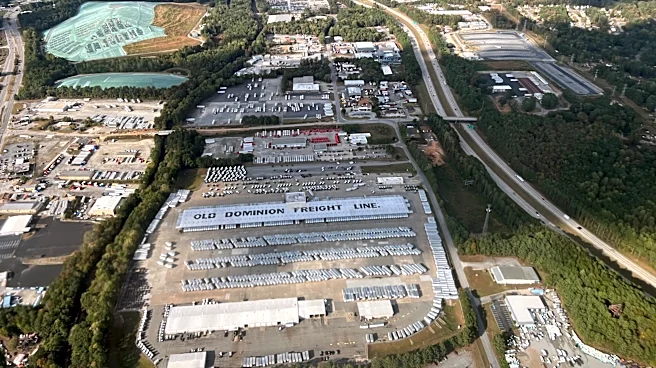
Wall Street private investment giants, including Brookfield and Blackstone, are increasingly focusing on industrial outdoor storage (IOS) properties across the U.S. These nondescript lots, used for storing industrial equipment like bulldozers and trucks,
are becoming a significant investment target. Brookfield, for instance, spent $1.2 billion earlier this year to acquire Peakstone Realty Trust, adding over 70 industrial properties, predominantly outdoor storage yards, to its portfolio. Blackstone's real estate debt arm has also been active, providing more than $1.1 billion in loans to IOS owners. This surge in institutional interest is driven by the critical role IOS plays in the supply chain and the perceived opportunity to consolidate a previously fragmented sector. Rents for IOS properties have seen substantial growth, nearly doubling across eight major markets between 2020 and the third quarter of this year, outpacing traditional industrial space rent increases.
Why It's Important?
The institutional investment in industrial outdoor storage signifies a strategic shift in real estate portfolios, recognizing the essential function these properties serve in the U.S. supply chain. The influx of capital from major players like Brookfield and Blackstone is transforming a sector traditionally dominated by smaller, local owners. This trend could lead to increased standardization and efficiency within the IOS market, potentially strengthening industrial supply chains nationwide. For smaller investors and local entrepreneurs, while competition from institutional capital is rising, opportunities still exist, particularly for properties below institutional deal-size thresholds. The rising rents and property values in this sector indicate a robust demand, partly fueled by the expansion of AI infrastructure which requires heavy equipment storage. This investment trend highlights the evolving landscape of industrial real estate and its direct connection to broader economic and technological developments.
What's Next?
The trend of institutional investment in industrial outdoor storage is expected to continue, with major firms likely to further consolidate the fragmented market. This could lead to continued rent growth and increased property values in key markets, especially those near seaports, rail lines, and highways. Smaller investors may find it increasingly challenging to compete with large institutional capital for prime assets, but opportunities will likely persist in smaller-scale deals and secondary markets. The increased institutional presence may also lead to more sophisticated financing options and operational improvements within the IOS sector. However, challenges such as zoning regulations and the cost of debt, influenced by potential interest rate hikes, will remain critical factors for all investors in this evolving market.
Beyond the Headlines
The growing institutional interest in industrial outdoor storage reflects a deeper recognition of the foundational elements supporting modern commerce and technological advancement. These seemingly mundane lots are crucial for the logistics of construction, infrastructure development, and the burgeoning AI industry, which demands significant physical infrastructure. The shift from fragmented local ownership to institutional control could bring about more professional management and potentially higher quality standards for these properties. However, it also raises questions about market accessibility for smaller players and the potential for increased market concentration. The focus on IOS underscores how even overlooked real estate segments can become vital investment opportunities, driven by underlying economic shifts and technological progress, highlighting the interconnectedness of various economic sectors.