



What's Happening?
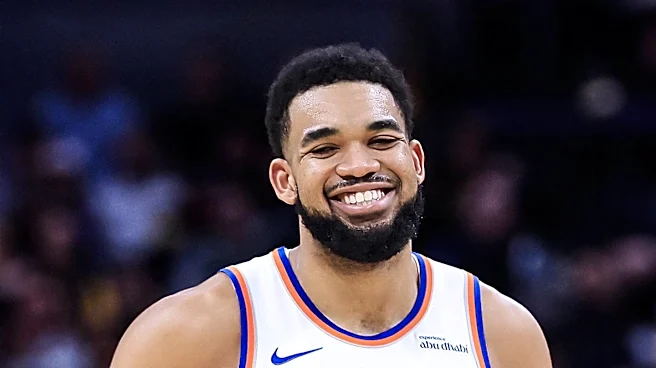
Karl-Anthony Towns, a key player for the New York Knicks, is reportedly considering a substantial contract sacrifice to stay with the team. He has two years remaining on his current $220 million deal, with the final year being a player option. Towns is eligible
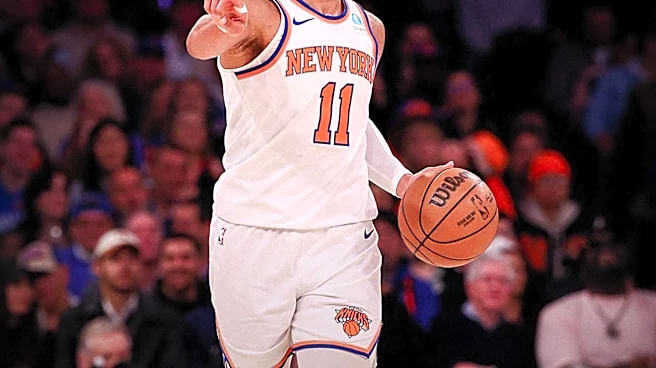
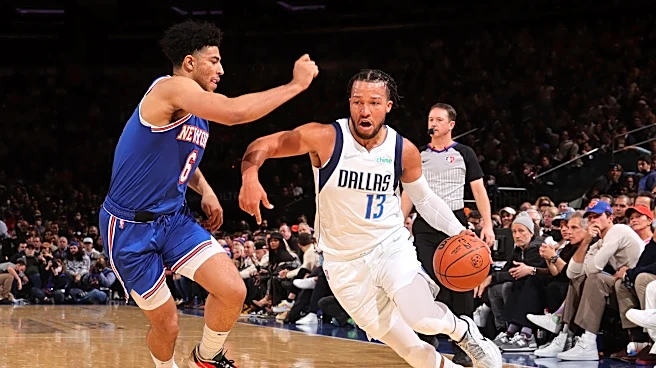
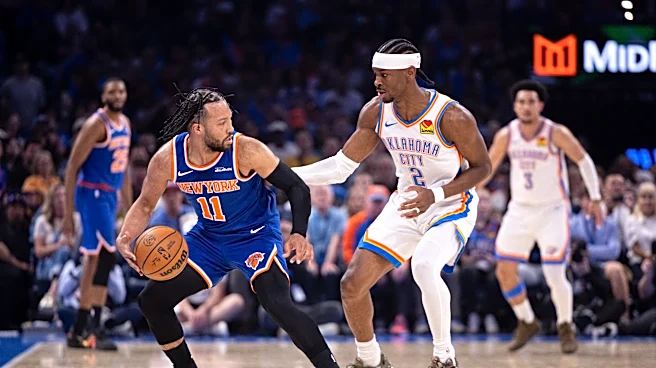
for a supermax extension, which could be approximately $220 million over four years. However, a recent article in The New York Post by Stefan Bondy predicts that Towns will follow teammate Jalen Brunson's example and accept a team-friendly deal, potentially leaving $92 million on the table. This would involve a roughly $20 million pay cut from his current deal, allowing him to remain in New York long-term. According to Brian Windhorst on 'The Hoop Collective' podcast, Towns' preference is to extend his contract with the Knicks.
Why It's Important?
This potential contract decision by Karl-Anthony Towns holds significant importance for the New York Knicks and the broader NBA landscape. A team-friendly deal would allow the Knicks to manage their salary cap more effectively, particularly in avoiding the second luxury tax apron. This financial flexibility is crucial for maintaining a competitive roster and potentially acquiring additional talent. For Towns, accepting a pay cut demonstrates a commitment to the team's championship aspirations over maximizing personal earnings, which could set a precedent for other star players in the league. His performance, especially during the postseason where he averaged 15.9 points, 10.6 rebounds, and 4.9 assists, along with improved defense, has been instrumental in the Knicks' success. Securing him at a discount would solidify the team's core and enhance their chances of contending for future championships.
What's Next?
The New York Knicks front office is expected to offer Karl-Anthony Towns an extension in the coming months. The key question remains whether Towns will indeed agree to a discounted deal, as predicted by Stefan Bondy, or if he will seek to maximize his earnings. While his preference is to remain with the Knicks, the financial implications of a supermax contract versus a team-friendly one are substantial. The outcome of these negotiations will directly impact the Knicks' salary cap situation and their ability to make further roster moves. If Towns accepts a pay cut, it would be a significant win for the organization, allowing them to build around their current core more sustainably. Conversely, if he opts for a supermax deal, the team will face greater financial constraints.
Beyond the Headlines
The decision facing Karl-Anthony Towns extends beyond mere financial figures; it delves into the evolving dynamics of player loyalty and team building in the NBA. In an era where player movement and maximizing earnings are often prioritized, a star player willingly taking a significant pay cut to stay with a team for championship contention could signal a shift in player-team relationships. This move could foster a stronger team culture, emphasizing collective success over individual financial gain. It also highlights the strategic importance of managing the luxury tax in the NBA, as teams increasingly seek ways to retain talent without incurring prohibitive penalties. The precedent set by Jalen Brunson, and potentially Towns, could influence how other star players approach contract negotiations, particularly with successful franchises aiming for sustained competitiveness.