






What's Happening?
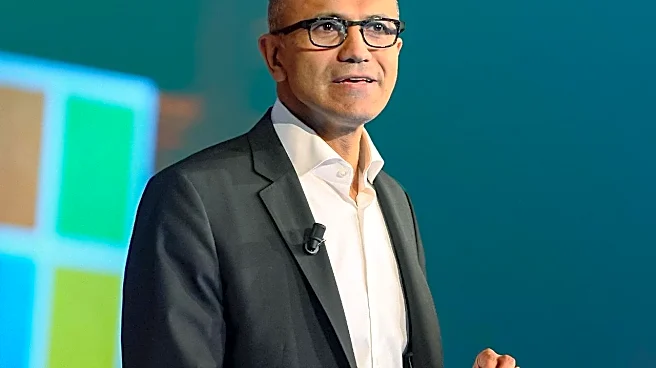
Satya Nadella, Microsoft Chairman and CEO, delivered the opening keynote at Ignite 2026 in San Francisco, focusing on building a 'frontier ecosystem' to capitalize on exponentially growing technological capabilities and manage their consequences. Nadella emphasized
Microsoft's mission to empower individuals and organizations, translating technological advancements into tangible outcomes. He outlined three core architectural principles: keeping human ambition at the center, ensuring organizational control over intelligence and learning, and fostering trust. Key product announcements included Copilot as the new operating system for work, integrating various human-computer interactions and knowledge work. Microsoft also introduced 'Work IQ' as a critical database for organizational intelligence and announced new models like Microsoft-Decision-1.1 and the MAI model family, designed for compute and token efficiency. The company also highlighted its hardware advancements, including the Maia 300 and Cobalt 200 VMs, and its 'AI Transparency Initiative' to establish open industry standards for AI transparency, security, and governance.
Why It's Important?
Nadella's keynote articulates Microsoft's comprehensive vision for the future of technology, particularly in the realm of AI and cloud computing. By focusing on a 'frontier ecosystem,' Microsoft aims to position itself as a leader in not only developing cutting-edge technologies but also in creating the infrastructure and ethical frameworks for their responsible deployment. The emphasis on human ambition, organizational control, and trust underscores a commitment to human-centric AI development, which is crucial for widespread adoption and societal benefit. The introduction of Copilot as an 'operating system for work' signifies a major shift in how individuals and teams will interact with technology, potentially streamlining workflows and boosting productivity across enterprises. The 'AI Transparency Initiative' is vital for addressing growing concerns about AI ethics and accountability, aiming to build public and industry confidence in AI systems.
What's Next?
Microsoft will continue to integrate and expand its Copilot capabilities across its product suite, making it a central hub for enterprise work. The company will also push forward with the development and deployment of its new AI models, focusing on optimizing performance and cost-efficiency for various business tasks. The 'AI Transparency Initiative' will involve ongoing collaboration with NIST and other organizations to develop and implement open industry standards for AI. This will likely influence future regulatory discussions and industry best practices for AI development and deployment. Microsoft's hardware advancements, such as the Maia 300 and Cobalt 200 VMs, indicate a continued investment in foundational infrastructure to support its AI and cloud ambitions, aiming to provide more efficient and powerful computing resources to its customers.
Beyond the Headlines
The concept of a 'frontier ecosystem' suggests a long-term strategic outlook that goes beyond immediate product cycles, aiming to shape the very landscape of technological innovation. Nadella's focus on 'human ambition' as a central tenet of AI development reflects a philosophical stance that positions technology as an enabler of human potential, rather than a replacement. This approach could influence how AI is perceived and adopted, fostering a more collaborative relationship between humans and machines. The 'AI Transparency Initiative' has deeper implications for the future of AI governance, potentially leading to a global standard for ethical AI that balances innovation with accountability. This could mitigate risks associated with AI, such as bias and misuse, and ensure that AI development aligns with broader societal values, fostering a more trustworthy and beneficial technological future.