




What's Happening?
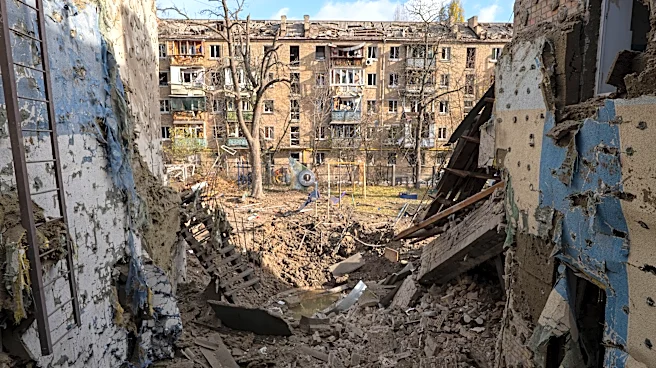
The Tallinn Black Nights Film Festival (PÖFF) is showcasing a 'Standing With Ukraine' film series for its 30th anniversary, featuring nine films that explore the psychological and emotional impacts of the ongoing war in Ukraine. This initiative, which
began after Russia's full-scale invasion in 2022, aims to support the Ukrainian film industry and keep Ukrainian culture visible. Films like 'Vesna' depict a priest secretly burying the dead in Russian-occupied territory, while 'I Rarely Wake up Dreaming' examines the effects of war on a queer couple amidst a gender transition. 'To Die to Live' follows three men whose lives are marked by their experiences on the front line, and 'Wings' explores the trauma of displacement for a Ukrainian family seeking refuge in Portugal. The festival also includes 'Slava: Shooting With Music,' focusing on Ukrainian rock star Sviatoslav Vakarchuk's efforts to boost morale through music, and 'Living On,' documenting a Lithuanian philosopher's medical aid missions to the front lines. Additionally, 'Slava' is a political thriller based on a real-life information campaign against KGB political murders, and 'Camouflage' portrays a Ukrainian student in Germany whose family seeks refuge with him after the invasion. 'Traces' documents the testimonies of six Ukrainian women who survived sexual violence and torture during the war.
Why It's Important?
This film series is important as it provides a platform for Ukrainian voices and narratives, offering a nuanced perspective on the human cost of the conflict beyond military engagements. By focusing on the psychological, emotional, and cultural dimensions of the war, the festival helps to counter potential desensitization to the ongoing crisis and fosters a deeper understanding of its impact on individuals and communities. The films highlight themes of resilience, trauma, identity, and resistance, which are crucial for international audiences to grasp the full scope of the conflict. Furthermore, the festival's commitment to supporting Ukrainian filmmakers and culture underscores the importance of cultural preservation and expression during times of war, reinforcing the idea that cultural identity is a vital component of national sovereignty and resistance. The diverse range of stories, from personal struggles to broader political narratives, ensures a comprehensive portrayal of the multifaceted challenges faced by Ukrainians.
What's Next?
The Tallinn Black Nights Film Festival will continue to feature these films, providing ongoing exposure to the stories and experiences of Ukrainians affected by the war. The festival's commitment to the 'Standing With Ukraine' strand suggests that similar initiatives will likely be part of future editions, ensuring continued support for Ukrainian cinema and cultural visibility. The films may also gain wider distribution through other international festivals and platforms, reaching a broader global audience and further amplifying their messages. This continued exposure could contribute to sustained international awareness and empathy for the situation in Ukraine, potentially influencing public opinion and policy discussions regarding humanitarian aid, support for refugees, and efforts towards peace and justice. The festival's emphasis on the psychological and emotional aspects of war may also encourage further artistic and academic exploration of these themes.
Beyond the Headlines
The festival's focus on the psychological and emotional aspects of warfare, as depicted in films like 'Vesna' and 'I Rarely Wake up Dreaming,' delves into the often-overlooked human toll of conflict. This approach challenges the conventional media focus on military statistics and geopolitical maneuvers, instead highlighting the profound and lasting impact on individual lives, relationships, and mental health. The inclusion of a film about a queer couple navigating war and gender transition, 'I Rarely Wake up Dreaming,' also brings to light the intersectional vulnerabilities and unique challenges faced by marginalized communities during conflict. Moreover, the emphasis on cultural preservation through music and film, as seen in 'Slava: Shooting With Music,' underscores the role of art as a form of resistance and a means of maintaining national identity in the face of aggression. The festival's stance reflects a broader understanding that cultural warfare is an integral part of modern conflicts, making the support of cultural institutions and artists a critical component of humanitarian and political solidarity.