





What's Happening?
American, Delta, and United Airlines are reportedly investing millions of dollars into their long-haul lounges at their home hubs in the United States, such as the new Delta One lounges in New York and Los Angeles, and United’s expanded Polaris Lounges
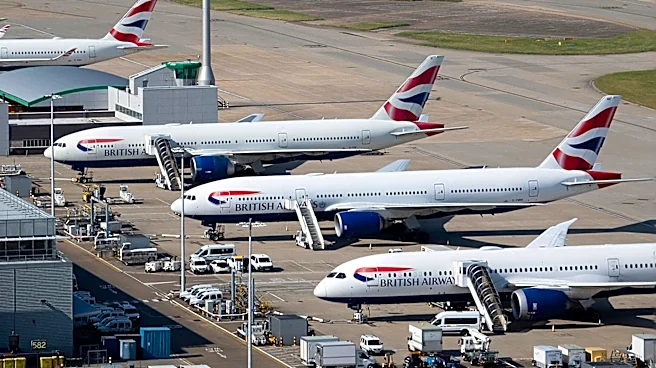
in Newark and Chicago. These domestic lounges are described as luxurious, resembling hotel lobbies, and have received stellar reviews. However, a contrasting situation is observed in their UK lounges, particularly at London Heathrow. The American Airlines lounge at Terminal 3 is noted as being in dire need of improvement, and the United Club at Terminal 2, while functional, does not meet the standard of the Polaris concept that was planned before the pandemic. Delta Air Lines is an exception, as it utilizes the Virgin Atlantic Clubhouse, which is considered a high-quality long-haul lounge. The disparity in investment suggests a prioritization of domestic facilities over international ones, despite London Heathrow being a crucial strategic hub for airlines globally.
Why It's Important?
This investment disparity is significant for U.S. airlines' international strategy and brand perception. Lounges serve as a critical first and last impression for premium long-haul passengers, and a subpar experience in key international hubs like London Heathrow can undermine the airline's overall brand promise. While U.S. airlines have historically focused on domestic routes, their expanding international networks necessitate a consistent premium experience across all major hubs. Neglecting international lounges could lead to dissatisfaction among high-value business and first-class travelers, potentially impacting their loyalty and choice of airline for future international travel. This could also affect the competitiveness of U.S. carriers against international airlines that maintain high standards across their global lounge networks, especially in a market as vital as London.
What's Next?
There are indications that the situation at London Heathrow might change, as the United Club at Terminal 2 is the only airline lounge that has not undergone a 10-year refurbishment, hinting at potential future developments. However, no concrete plans or timelines for significant upgrades to the American Airlines or United lounges in London have been announced. Stakeholders, including premium passengers and industry observers, will likely continue to monitor these airlines' investment decisions in their international facilities. The pressure to align the international ground experience with the domestic luxury offerings may increase, especially as global travel continues to recover and competition intensifies. Airlines may need to re-evaluate their global lounge strategies to ensure a consistent and high-quality experience for all long-haul travelers.
Beyond the Headlines
The differing investment strategies highlight a broader challenge for U.S. airlines in balancing domestic market dominance with global competitiveness. While the U.S. market remains a primary focus, the increasing interconnectedness of global travel means that international touchpoints, such as lounges, play a crucial role in shaping brand perception and customer loyalty. The 'good enough' approach to international lounges could reflect a strategic calculation that the volume and profitability of domestic premium travel outweigh the need for equivalent investment abroad, or it could be a legacy of their historical focus as primarily domestic carriers. However, in an era where luxury and seamless travel experiences are increasingly expected, this imbalance could lead to a perception gap, potentially affecting their long-term standing in the competitive international aviation landscape.