




What's Happening?
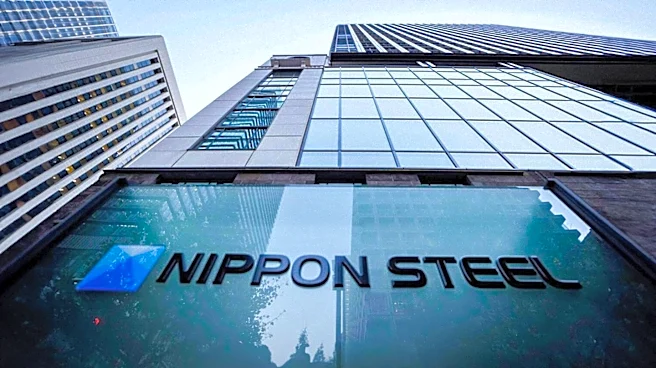
U.S. Steel and the United Steelworkers (USW) have announced a tentative four-year labor agreement, marking the first union deal since Japan-based Nippon Steel acquired U.S. Steel in June 2025. This proposed agreement, if ratified, would extend through
September 1, 2030, and encompass 11,200 employees across 13 U.S. Steel facilities located in Alabama, Illinois, Indiana, Michigan, Minnesota, and Pennsylvania. These facilities include domestic flat-rolled, iron ore mining, and tubular operations. The terms of the proposal, as detailed on the steelmaker's website, include significant benefits for employees such as reduced healthcare costs with no premiums or caps, a total wage growth of 19.25% over the contract term, annual base pay increases, and a $4,000 ratification bonus for eligible workers. Additionally, the agreement ensures continued pension trust funding, unchanged profit sharing, and holiday and vacation benefits. U.S. Steel has also committed to investing $4.5 billion in union-backed facilities. The USW has not yet set a ratification date, planning to review the proposal with its members in the coming weeks.
Why It's Important?
This tentative labor agreement is crucial for the stability and future operations of U.S. Steel, particularly following its acquisition by Nippon Steel. A ratified deal would provide labor peace and operational certainty for the newly integrated entity, allowing it to focus on strategic investments and market competitiveness. The commitment to invest $4.5 billion in union-backed facilities signals a significant long-term investment in American manufacturing infrastructure and job security, potentially bolstering the domestic steel industry. For the United Steelworkers, the agreement represents a substantial win, securing improved wages, healthcare benefits, and retirement provisions for over 10,000 workers. This could set a precedent for future labor negotiations within the manufacturing sector, especially in industries undergoing international acquisitions. The deal also highlights the ongoing importance of union representation in ensuring fair labor practices and worker benefits in a globalized economy, impacting the livelihoods of thousands of families and the economic health of several U.S. states.
What's Next?
The immediate next step involves the United Steelworkers reviewing the proposed agreement with its members. A ratification vote will determine whether the deal is officially adopted, which would then solidify the labor terms for the next four years. If ratified, U.S. Steel will proceed with its committed $4.5 billion investment in union-backed facilities, potentially leading to modernization and expansion of its operations across the affected states. The successful ratification of this agreement could also influence ongoing labor negotiations in the steel industry, particularly given that competitor Cleveland-Cliffs recently reached a similar four-year labor agreement with the USW, which also awaits ratification. The outcome of these votes will shape the labor landscape for major U.S. steel producers and their workforces for the foreseeable future, impacting production capacities, market stability, and the overall economic outlook for the sector.
Beyond the Headlines
The tentative labor agreement between U.S. Steel and the United Steelworkers, post-Nippon Steel's acquisition, carries deeper implications beyond immediate economic benefits. It underscores the complex interplay between international corporate acquisitions and domestic labor relations, particularly in critical industries like steel manufacturing. The commitment to significant investments in U.S. facilities by a foreign owner, coupled with robust labor protections, could serve as a model for future cross-border mergers, demonstrating how such deals can be structured to benefit both corporate interests and the American workforce. This agreement also highlights the enduring power of organized labor in shaping corporate policy and ensuring equitable distribution of profits, even in a rapidly evolving global market. The focus on healthcare, wages, and pension funding reflects a broader societal concern for worker welfare and economic security, potentially influencing public policy discussions around industrial investment and labor rights in the U.S.