
What's Happening?
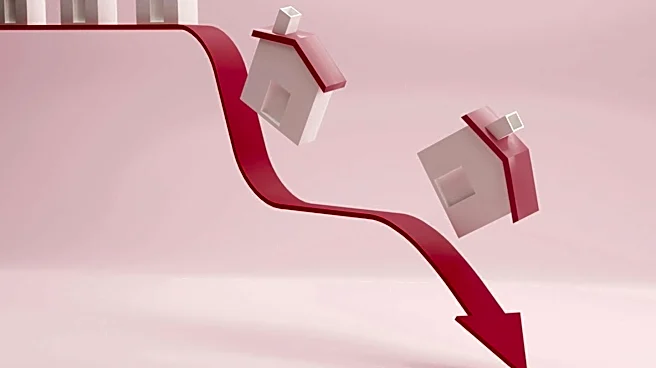
The U.S. housing market is currently experiencing a 'stand-down,' characterized by a significant drop in sales volume while prices remain relatively flat, according to Knowledge at Wharton. Pending home
sales, which indicate contracts signed but not yet closed, fell by 5% in October and are 17% lower than a year ago, reaching a 16-year low. This decline is attributed to high mortgage rates, with Freddie Mac's 30-year average at 7.18% in the first week of November, a substantial increase from 6.22% a year prior. This rise in rates has significantly increased homeownership costs and the required qualifying income for buyers. Simultaneously, potential sellers are increasingly delisting properties, as nearly 80% of outstanding U.S. mortgages carry rates below 6%, making it financially disadvantageous for them to sell and repurchase at current higher rates. Sales have decreased across all regions, with the West and South experiencing the most significant year-over-year declines.
Why It's Important?
This 'stand-down' in the housing market has profound implications for U.S. consumers, the real estate industry, and the broader economy. The combination of high mortgage rates and flat prices creates a challenging environment for both buyers and sellers. Buyers face increased affordability hurdles, while sellers are reluctant to move due to the financial disincentive of trading a low-interest mortgage for a much higher one. This stagnation in transactions can slow economic activity related to housing, such as construction, home improvement, and associated retail sales. The lack of inventory further exacerbates the issue, creating a cycle where neither side is incentivized to act. The situation highlights a significant disconnect between demand and supply, driven by interest rate dynamics, and suggests a prolonged period of adjustment for the housing sector.
What's Next?
According to Knowledge at Wharton, there are three primary ways to restore affordability and liquidity to the housing market. The first is through time, where nominal prices remain flat while inflation and wages increase, gradually reducing real prices without significant headline losses. This slow process allows for the natural decay of 'lock-in' effects as mortgages are paid down and life events necessitate moves. The second path involves a reduction in interest rates, ideally to the 5.5%-6% range, which could narrow the affordability gap and encourage both buyers and sellers. However, this is largely outside the control of market participants. The third solution is an increase in new construction, which would require lower construction financing costs, reduced material and labor expenses, and regulatory relief. A fourth, less desirable, outcome would be a recession leading to job losses, forcing sales and potentially lowering nominal prices, but at a significant economic cost.
Beyond the Headlines
The current housing market 'stand-down' reveals deeper structural issues beyond just interest rates. The phenomenon of 'mortgage lock-in,' where homeowners are reluctant to sell due to their historically low mortgage rates, is creating an artificial scarcity of inventory. This situation underscores the long-term impact of monetary policy on individual financial decisions and the broader economy. It also highlights the challenge of achieving housing affordability in a market where supply is constrained and demand is influenced by fluctuating economic conditions. The ethical dimension arises from the potential for widening wealth gaps, as those with existing low-rate mortgages benefit from appreciating assets, while new buyers face significant barriers to entry. This market dynamic could lead to a re-evaluation of housing policies and incentives to encourage mobility and increase housing supply.