





What's Happening?
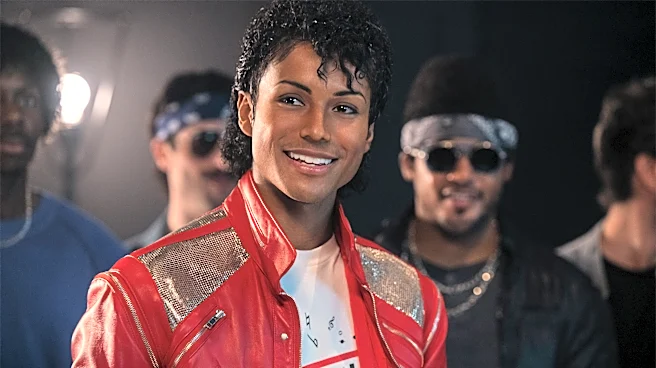
The music biopic 'Michael', released in April 2026, will not be submitted for consideration at the 2027 EE BAFTA Film Awards. This decision was made by the film's producers, GK Films and Universal, and removes the film, its lead star Jaafar Jackson, and supporting
actor Colman Domingo from contention for any BAFTA awards. The reasons behind this choice have not been publicly disclosed by the film's team or the studios involved. This move is notable given that producer Graham King's previous music biopic, 'Bohemian Rhapsody', successfully campaigned at the BAFTAs, with Rami Malek winning for leading actor before securing four Oscars. Despite skipping the BAFTAs, the film's awards campaign is expected to continue focusing on other major events, including the Critics Choice Awards, Golden Globes, and the Academy Awards.
Why It's Important?
This decision by the producers of 'Michael' to bypass the BAFTA Film Awards carries significant implications for the film's overall awards season strategy and the careers of its cast and crew. By not submitting to the BAFTAs, the film forfeits a major international platform that could have boosted its visibility and critical momentum leading up to the Academy Awards. For emerging talents like Jaafar Jackson, a BAFTA nomination or win could have provided crucial exposure and validation from an international voting body, potentially influencing Oscar voters. While BAFTA eligibility does not directly impact Oscar eligibility, success at the BAFTAs often serves as a strong indicator and a valuable campaigning tool. The absence from such a prominent awards show could make the film's path to other nominations, particularly the Oscars, more challenging, especially considering that the Golden Globes also rejected the film's request to compete in the comedy or musical categories, placing it in the more competitive drama race.
What's Next?
Despite the decision to skip the BAFTAs, the film 'Michael' remains eligible for other significant awards. Its campaign will now concentrate on the Critics Choice Awards, Golden Globes, and the Academy Awards. The film's performance in these upcoming award circuits will be crucial in determining the impact of its BAFTA withdrawal. If 'Michael' secures nominations and wins at these other ceremonies without BAFTA's support, the producers' decision might be viewed as a strategic success. Conversely, a lack of recognition could lead to questions about the wisdom of bypassing such a major awards platform. The film's box office success, having surpassed $1 billion worldwide, indicates strong audience appeal, but critical reception has been mixed, which could also influence its awards prospects moving forward.
Beyond the Headlines
The decision to withdraw 'Michael' from BAFTA consideration, while officially unexplained, has led to speculation regarding potential underlying factors. One notable context is a past incident involving producer Graham King and BAFTA, where King publicly criticized the organization and the BBC for perceived cultural insensitivity following an incident at a previous ceremony. While sources have not directly linked this past dispute to the current decision, it remains a point of discussion. Furthermore, the film's critical reception, which has been mixed with some reviewers calling it 'saccharine' and 'estate approved image polishing,' could also play a role. The film's narrative choice to conclude around 1988, omitting later controversies, has drawn criticism, potentially influencing its awards appeal. This situation highlights the complex interplay between artistic choices, critical reception, industry politics, and awards campaign strategies in the competitive landscape of major film awards.