







What's Happening?
Goldgroup Mining Inc. is actively progressing multiple projects across its four wholly-owned precious-metals assets in Mexico and the United States. The company is conducting extensive technical studies, exploration programs, and drilling activities.
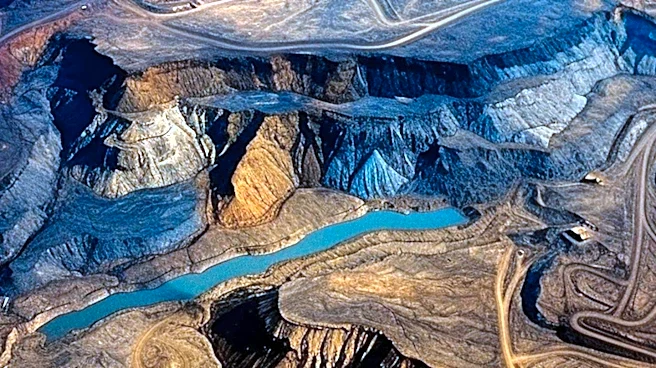
In Mexico, Goldgroup operates the Don David Gold/Silver Mine in Oaxaca and the Cerro Prieto Gold Mine in Sonora. A significant focus is on the San Francisco Gold Project in Sonora, where a 26,000-meter drilling program is underway to evaluate a potential restart of the formerly producing open-pit operation. This program aims to define resources, expand known mineralization, and gather data for mine planning and technical studies. Concurrently, the company is refurbishing existing processing infrastructure, including the crushing circuit and ADR plant, in preparation for a potential restart. At Cerro Prieto, Goldgroup is working on a project to re-leach existing heaps to recover un-leached gold and expand the mineral resource base. In the U.S., the company is advancing a comprehensive Feasibility Study for its Back Forty Project in Michigan's Upper Peninsula, which is envisioned as a combined open-pit and underground operation for a gold-rich volcanogenic massive sulfide deposit.
Why It's Important?
Goldgroup's multi-faceted approach to advancing its mining projects is crucial for its growth strategy, aiming to build an intermediate mining company through production growth, exploration, mine optimization, project development, and disciplined mergers and acquisitions. The potential restart of the San Francisco Gold Project and the development of the Back Forty Project in Michigan could significantly increase Goldgroup's production capacity and asset value. The focus on resource expansion and mine-life extension at its Mexican operations ensures sustained output and long-term viability. For the U.S., the Back Forty Project represents a notable development opportunity, potentially contributing to domestic mineral production and creating jobs in Michigan. The company's efforts to optimize existing operations and explore new targets are vital in a volatile market, providing a balanced platform for current production and future growth. This strategic development could also impact the supply chain for precious metals, particularly gold and silver, and other base metals like copper and zinc, which are increasingly important for various industries.
What's Next?
Goldgroup Mining Inc. anticipates a critical period in the coming months as drilling results are incorporated into technical work and development decisions approach. The San Francisco Gold Project is moving closer to a restart decision, pending the completion of technical studies and mine planning. Exploration efforts at the Don David and Cerro Prieto districts will continue, with further drilling results expected to inform resource expansion and mine-life opportunities. The Feasibility Study for the Back Forty Project in Michigan is progressing, which will determine the technical and economic parameters for its advancement toward a development decision. The company plans to provide regular updates to shareholders as these various work streams advance. Additionally, Goldgroup has entered into a digital marketing services agreement to enhance investor awareness, subject to TSX Venture Exchange approval, indicating a focus on communicating its progress and value creation to the market.
Beyond the Headlines
The advancement of projects like Goldgroup's Back Forty in Michigan highlights the ongoing tension between economic development and environmental concerns in the U.S. mining sector. While the company emphasizes technical studies and environmental considerations, such projects often face scrutiny regarding their potential impact on local ecosystems and communities. The broader context involves the increasing demand for critical minerals for technologies like electric vehicles and renewable energy, which drives mining exploration and development. However, this also necessitates robust regulatory oversight and community engagement to ensure sustainable practices. The company's strategy of balancing current production with long-term development opportunities reflects a common industry challenge: meeting immediate market demands while securing future resource supplies. The success of these projects could set precedents for how mining companies navigate environmental regulations and community relations in North America, particularly in states like Michigan with sensitive natural environments.