


What's Happening?
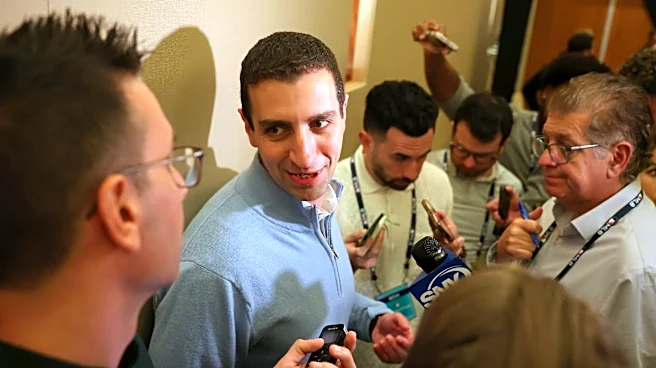
New York Mets President of Baseball Operations David Stearns is reportedly risking his position by opting for a platoon at first base, a strategy that has drawn scrutiny from team owner Steve Cohen. Stearns allowed first baseman Pete Alonso to leave via
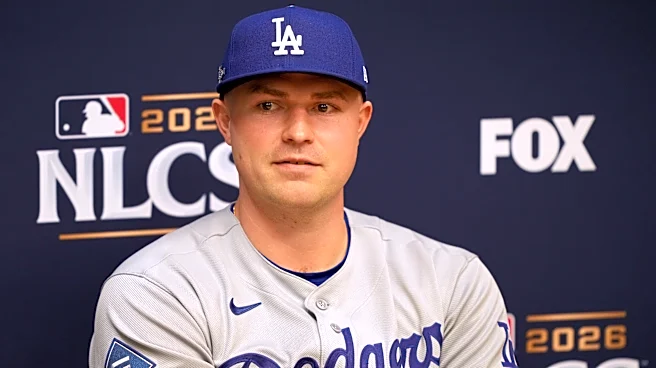
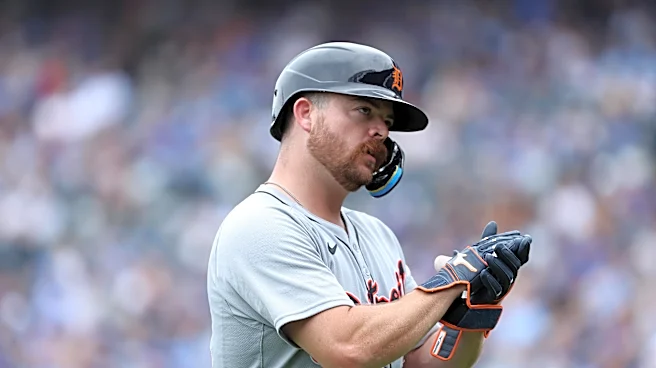
free agency, creating a significant void in the team's infield. He plans to fill this gap by utilizing journeyman Jared Young, who had a .266/.330/.429 slash line with nine home runs and 39 RBIs in 2026, primarily against right-handed pitchers. Stearns indicated that while Young is seen as part of the solution, the team will look to supplement the position, either with a regular player or someone to split time with Young. This decision comes as Cohen expresses dissatisfaction with the Mets' ongoing lack of a World Series win and multiple losing seasons, despite significant financial investment. Cohen has reportedly spent upwards of $800 million to improve the team, yet the Mets have only reached the National League Championship Series. Cohen has publicly stated that the constant losing is 'inexcusable' and demands change, putting pressure on Stearns to deliver victories.
Why It's Important?
This situation highlights the immense pressure on sports executives in high-stakes environments like Major League Baseball, particularly when backed by a billionaire owner like Steve Cohen. Stearns' decision to rely on a platoon at a key power position, rather than pursuing a high-profile free agent or trade, could have significant implications for the Mets' performance and his own career. If the strategy fails, it could lead to further fan disillusionment and potentially cost Stearns his job, reinforcing the notion that financial investment alone does not guarantee success without effective management decisions. Conversely, if the platoon system proves successful, it could redefine approaches to roster construction in baseball, demonstrating that strategic utilization of existing talent and calculated risks can yield results. The outcome will also be a test of Cohen's patience and his willingness to allow his baseball operations leadership to implement unconventional strategies, even when under intense scrutiny.
What's Next?
The Mets' first base situation will be closely watched as the 2027 regular season approaches. Stearns has indicated that the team is not closing the door on further additions to the roster, suggesting that the offseason could still bring changes. However, the current plan involves Jared Young as a significant part of the first base solution. The team's performance in the upcoming season will be the ultimate determinant of the success of Stearns' strategy and his tenure with the Mets. If the team continues to underperform, especially given Cohen's explicit demands for change and his substantial financial backing, Stearns' position will likely become untenable. The focus will be on whether the Mets can translate their financial resources into on-field victories and finally achieve the World Series success that Cohen desires.
Beyond the Headlines
The dynamic between Steve Cohen and David Stearns reflects a broader trend in professional sports where wealthy owners, accustomed to success in other ventures, demand immediate results from their sports franchises. This often leads to a tension between long-term strategic planning by baseball operations executives and the owner's desire for quick returns on investment. The 'Steve Cohen tax,' as it's sometimes referred to, implies that the Mets have the financial muscle to outspend competitors, yet this scenario demonstrates that money alone doesn't guarantee a smooth path to championships. It also raises questions about the balance of power within a sports organization: how much autonomy should a general manager have when an owner is willing to spend lavishly but expects immediate gratification? The outcome of this gamble could influence how other high-spending owners approach their team's management and roster decisions in the future.