






What's Happening?
Asteroid 3 Juno, located in the main asteroid belt, reaches opposition on July 26, 2026, making it visible all night. Despite the bright waxing moon, Juno can be observed in the constellation Aquila. The asteroid shines at a magnitude of 9, requiring
a telescope for optimal viewing. Juno is positioned near the eastern wing of Aquila, close to the star Theta Aquilae. This celestial event provides an opportunity for astronomers and enthusiasts to observe one of the larger asteroids in the solar system. The event coincides with Saturn reaching a stationary point, visible in the southeastern sky.
Why It's Important?
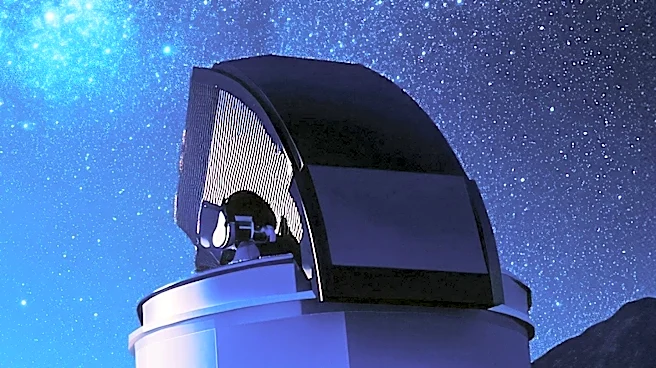
The opposition of asteroid Juno offers a unique opportunity for astronomers to study its characteristics and trajectory. Observing such celestial events contributes to our understanding of the solar system's dynamics and the behavior of asteroids. This knowledge is crucial for assessing potential asteroid impacts on Earth and developing strategies for planetary defense. The event also serves as an educational moment, encouraging public interest in astronomy and space exploration. It highlights the importance of continued investment in telescopic technology and space observation programs.
What's Next?
Following Juno's opposition, astronomers will continue to monitor its path and gather data to refine models of its orbit. The event sets the stage for future observations of other celestial bodies, such as Saturn, which is currently visible in the southeastern sky. As the interest in space exploration grows, institutions may increase public outreach efforts, offering more opportunities for community engagement in astronomy. These initiatives are vital for inspiring the next generation of scientists and fostering a deeper appreciation for the universe.