




What's Happening?
Walmart is implementing significant changes across its U.S. operations, including the remodeling of over 650 Supercenters and Neighborhood Markets in 2026. This modernization effort aims to enhance the shopping experience with new layouts, updated technology,
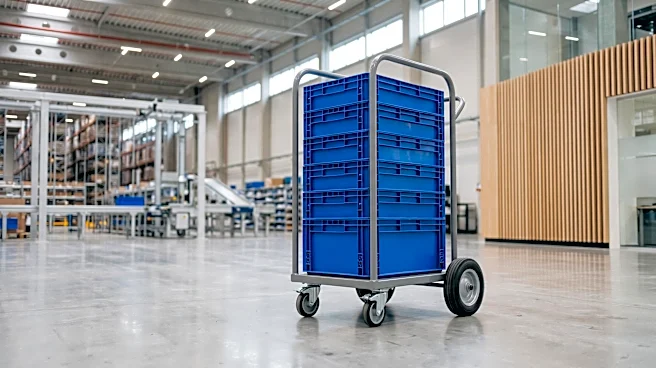
and increased personalized service at checkout, potentially reducing self-checkout options in some locations. Concurrently, the company is revising its internal rules for employees preparing online orders. A new memo dictates a maximum of six blue fulfillment containers per cart, down from eight, and specifies that employees should push carts when visibility is clear and only pull them when vision is limited. This policy partially reverses a previous directive that mandated pulling carts in all instances. These operational adjustments come as Walmart's e-commerce sector continues to grow, reporting a 27% increase in the last quarter, marking its eighth consecutive quarter of over 20% expansion. The company processes hundreds of online orders daily from its more than 4,600 stores, which function as distribution hubs for deliveries and in-store pickups.
Why It's Important?
These changes by Walmart carry significant implications for both its operational efficiency and the customer experience. The remodeling of 650 stores reflects a strategic investment in physical retail, aiming to modernize the shopping environment and potentially attract more in-store traffic. By focusing on personalized service and updated technology, Walmart is responding to evolving consumer expectations and competitive pressures in the retail sector. The adjustments to online order fulfillment, particularly the reduction in cart capacity, could impact the speed and efficiency of order preparation, a critical factor in the rapidly growing e-commerce market. While potentially slowing down individual order fulfillment, this measure is likely a response to safety concerns, as indicated by a past legal settlement where Walmart paid $1.2 million for a customer injury related to a cart. The company plans to mitigate potential slowdowns by deploying digital shelf labels with LED guides, which are already installed in half of its network, to assist employees. These operational shifts highlight Walmart's ongoing efforts to balance the demands of its booming e-commerce business with the need for safe and efficient in-store operations.
What's Next?
The remodeling of over 650 Walmart Supercenters and Neighborhood Markets is scheduled to take place throughout 2026. These renovations will introduce new store layouts, updated technology, and potentially alter the balance between self-checkout and personalized cashier services. For instance, 32 stores in Pennsylvania, including four in the Philadelphia region, are confirmed for upgrades. Concurrently, employees will continue to adapt to the new guidelines for online order fulfillment carts, which limit the number of containers and specify pushing versus pulling methods. Walmart's implementation of digital shelf labels with LED guidance will likely expand to more stores to support these new fulfillment processes. The company will closely monitor the impact of these changes on both operational efficiency and customer satisfaction, particularly as its e-commerce growth continues. Future adjustments to store operations and fulfillment strategies may be made based on the outcomes of these initiatives, as Walmart seeks to maintain its competitive edge in both physical and online retail.
Beyond the Headlines
The comprehensive transformation at Walmart, encompassing both physical store remodels and operational adjustments for online order fulfillment, reflects a broader industry trend of retailers adapting to a hybrid shopping landscape. The emphasis on modernizing the in-store experience with new layouts and personalized service suggests a recognition that physical stores remain crucial, even as e-commerce flourishes. This move could signal a shift away from a sole focus on speed and efficiency towards a more balanced approach that prioritizes customer comfort and safety. The changes to fulfillment cart usage, while seemingly minor, underscore the complex logistical challenges of integrating online and in-store operations. The company's investment in digital shelf labels highlights the increasing role of technology in optimizing employee workflows and enhancing overall operational effectiveness. These developments illustrate how large retailers are navigating the evolving demands of consumers who expect seamless experiences across multiple shopping channels, while also addressing practical concerns like employee safety and operational efficiency.