







What's Happening?
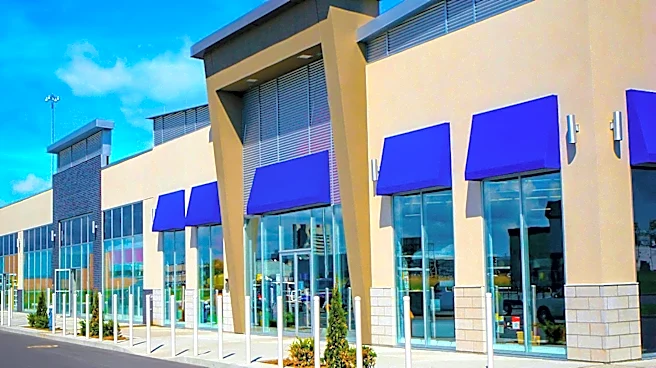
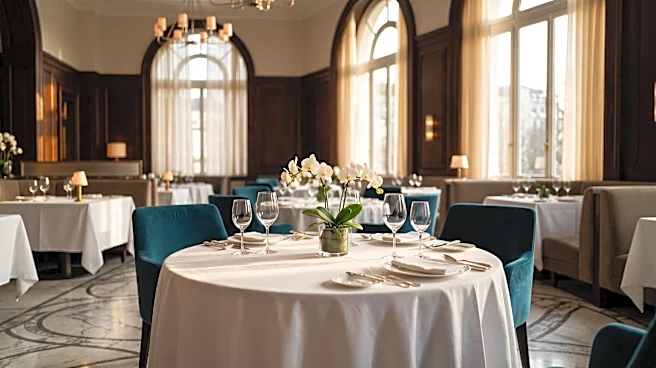
California-based designer Chele McKee is transforming retail and hospitality environments by focusing on the human experience rather than just aesthetics or transactions. McKee, who has worked with major brands like Disney, adidas, and Gap, believes the distinctions
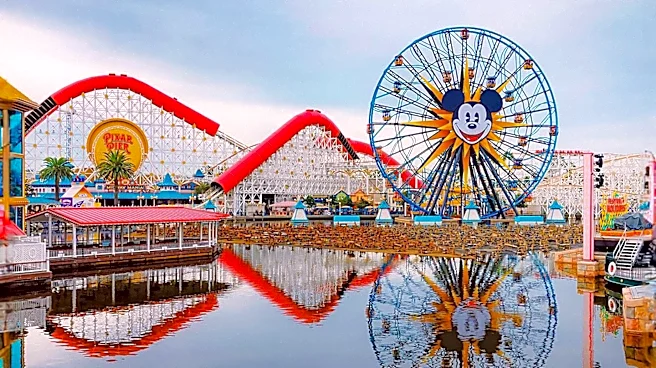
between retail and hospitality are blurring. Her approach involves deep empathy and observation, aiming to understand how individuals move through and interact with a space. For instance, at Disney, she implemented a 'Four Foot and Under' rule, designing merchandising elements at children's eye level to enhance their experience. Similarly, for the hunting brand SITKA, McKee immersed herself in the culture of hunting to create an authentic store environment that felt like a gathering place. She emphasizes creating 'launch moments' that immediately establish a mood and encourages blank spaces to foster curiosity, moving away from the traditional retail focus on maximizing every square inch for sales. McKee argues that while technology excels at efficiency, physical spaces must offer connection, surprise, and delight to remain relevant.
Why It's Important?
McKee's philosophy is significant because it challenges conventional retail and hospitality design, which often prioritizes efficiency and transaction over emotional engagement. In an increasingly digital world where consumers can purchase almost anything online, physical spaces need to offer something unique and irreplaceable. By focusing on the 'choreography' of a space rather than just its 'decoration,' McKee highlights the importance of creating environments that make people feel comfortable, curious, and connected. This approach can lead to more memorable experiences for consumers, fostering brand loyalty and deeper engagement. For businesses, this means shifting investment from purely transactional layouts to experiential designs that encourage lingering, discovery, and personal interaction. The success of her methods with diverse brands suggests a broader applicability across various sectors, indicating a potential paradigm shift in how physical commercial spaces are conceived and utilized in the U.S. market.
What's Next?
The trend towards human-centric design, as championed by McKee, is likely to gain further traction in the U.S. retail and hospitality sectors. Businesses may increasingly invest in designers who prioritize empathy, observation, and experiential storytelling to differentiate themselves in a competitive market. This could lead to more hybrid spaces that blend elements of retail, hospitality, and community gathering. We might see more stores incorporating event spaces, cafes, or interactive exhibits, and hotels integrating retail experiences that extend their brand narrative. As consumers continue to seek authentic and meaningful interactions, companies that adopt this design philosophy will likely see increased foot traffic, longer dwell times, and stronger emotional connections with their clientele. The emphasis on 'high-touch, low-tech' experiences suggests a future where physical environments serve as antidotes to digital overload, offering unique sensory and social engagements that technology cannot replicate.
Beyond the Headlines
McKee's work touches upon deeper implications regarding the role of physical space in human experience and commerce. Her emphasis on treating people as 'emotional beings' rather than just 'consumers' highlights a fundamental shift in understanding human behavior within commercial settings. This perspective suggests that successful design goes beyond mere aesthetics or functionality; it delves into psychology, sociology, and even anthropology to create environments that resonate on a deeper level. The idea that physical spaces can offer 'correction, connection, surprise and delight' and remind us 'that we’re human' points to a potential re-evaluation of what constitutes value in a consumer society. In an era dominated by digital interactions, the physical world's unique ability to provide visceral feelings, personal encounters, and a sense of place becomes increasingly precious. This could lead to a cultural appreciation for well-designed physical environments, recognizing them not just as commercial venues but as essential components of our lived experience.