






What's Happening?
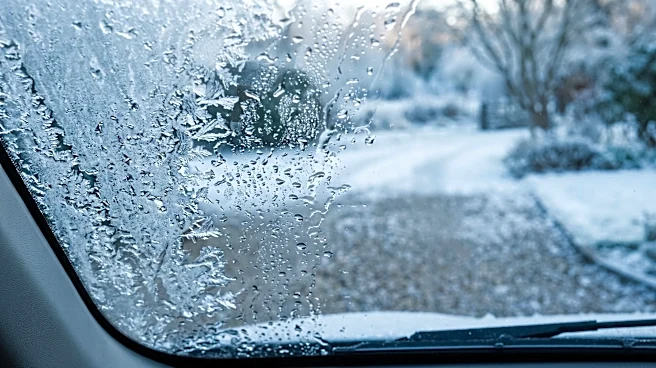
Former NASA engineer Mark Rober has revealed a science-backed technique for quickly demisting and de-icing car windscreens, a common issue for motorists in cold weather. Rober, who spent nine years at NASA, including seven years on the Mars Curiosity
Rover project, shared his method in a YouTube video. The core of his advice focuses on reducing humidity inside the vehicle. He recommends turning the heater on full blast, engaging the air conditioning to pull moisture from the air, and ensuring the air recirculation function is off. Additionally, Rober suggests slightly cracking the windows to exchange humid interior air with drier outside air. He also offered a less conventional tip: placing cat litter in a tied sock under the windscreen to act as a natural dehumidifier.
Why It's Important?
This practical advice from a former NASA engineer offers a significant benefit to U.S. motorists, particularly during colder months when demisting and de-icing windscreens can cause delays and safety concerns. By providing a faster and more effective method, Rober's tips can improve daily commutes, reduce frustration, and potentially enhance road safety by ensuring clearer visibility more quickly. The reliance on readily available car features like heaters and air conditioning makes the method accessible to a wide range of drivers. The emphasis on reducing humidity, rather than just heating, addresses the root cause of condensation, offering a more efficient solution than traditional scraping or waiting for prolonged periods.
What's Next?
As temperatures continue to drop across the U.S., more motorists are likely to adopt Rober's method to clear their windscreens. The widespread sharing of such practical tips through platforms like YouTube can lead to a shift in common practices for dealing with cold-weather driving challenges. While no formal actions are expected from automotive manufacturers or regulatory bodies based on this individual tip, increased awareness could influence driver education or even future car design considerations for more efficient demisting systems. The simplicity and effectiveness of the method suggest it could become a widely adopted 'hack' for winter driving.
Beyond the Headlines
Rober's advice highlights a broader principle of applying scientific understanding to everyday problems. His background in complex engineering projects like the Mars Curiosity Rover underscores how fundamental scientific principles, such as humidity control, can have practical applications far beyond their initial high-tech contexts. This demonstrates the value of STEM education and the transferability of scientific knowledge. The use of a simple household item like cat litter as a dehumidifier also points to innovative, low-cost solutions that can be derived from understanding basic physics and chemistry, encouraging a more resourceful approach to common inconveniences.