





What's Happening?
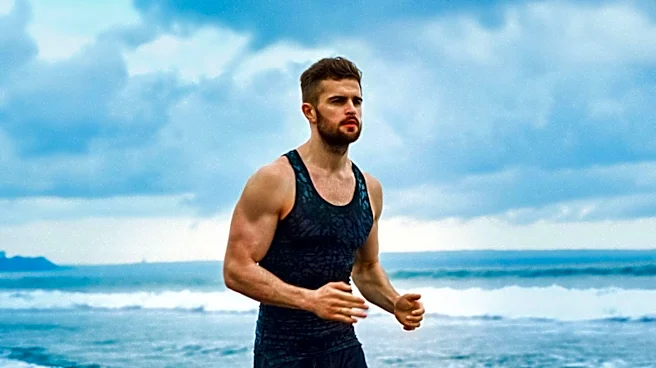
John Mazzei, a 57-year-old ballroom dance instructor from Long Island, has gained recognition for running six marathons, including four New York City Marathons, completely barefoot. Mazzei, who started running around age 43, initially experienced knee
pain with traditional running shoes. Inspired by Christopher McDougall's book 'Born to Run,' he transitioned to barefoot running, which he claims has resolved his knee issues. He trains by running on various surfaces, including jagged roadside pebbles, and has even been pulled over by police who mistook him for a robbery suspect due to his shoeless appearance. Mazzei will not be running this year's New York City Marathon as he is focused on qualifying for the Boston Marathon.
Why It's Important?
John Mazzei's barefoot marathon running challenges conventional wisdom about athletic footwear and performance. His experience suggests that for some individuals, barefoot running can be a viable and even beneficial alternative to traditional shoes, potentially reducing certain types of injuries. This practice has implications for the sports equipment industry, as it highlights a niche but growing interest in minimalist or barefoot running. His story also serves as an inspirational example of pursuing unconventional methods to achieve fitness goals, demonstrating resilience and a unique approach to endurance sports. The attention he receives, including from top athletes like Meb Keflezighi, underscores the curiosity and debate surrounding barefoot running within the broader athletic community.
What's Next?
Mazzei's immediate goal is to qualify for the Boston Marathon, which will involve continued rigorous barefoot training and participation in qualifying races. His ongoing success could further popularize barefoot running, encouraging more individuals to explore this method. The scientific community may continue to study the biomechanical effects and injury rates associated with barefoot running, potentially leading to new insights into running form and footwear design. Mazzei's story will likely continue to be shared, inspiring others to question traditional approaches to exercise and find what works best for their bodies. His journey also highlights the personal and often solitary nature of extreme endurance challenges.
Beyond the Headlines
Mazzei's barefoot running journey touches on deeper themes of human adaptation, connection to nature, and the re-evaluation of modern conveniences. In a society heavily reliant on specialized gear, his choice to run without shoes represents a return to a more primal form of movement. This practice can be seen as a form of biohacking, where individuals experiment with natural methods to optimize physical performance and well-being. It also raises questions about the commercialization of sports and fitness, suggesting that expensive equipment is not always necessary for peak performance. His ability to perform 'minor surgery' on his own feet after encountering debris speaks to a profound self-reliance and a unique relationship with his body and the environment.