

What's Happening?
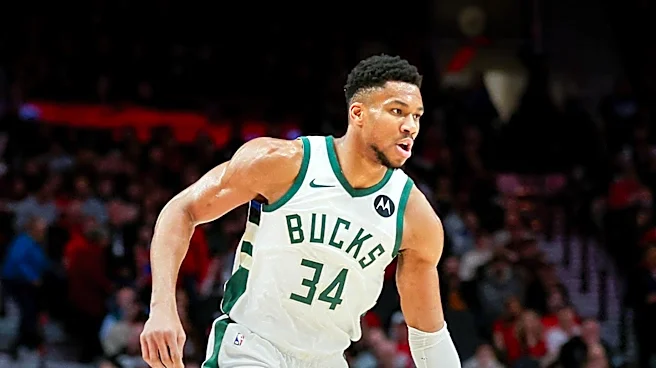
The Miami Heat made a significant move by acquiring Giannis Antetokounmpo, a decision that has elevated the team's status as a serious contender in the upcoming NBA season. This blockbuster trade has placed the Heat higher in early power rankings, reflecting
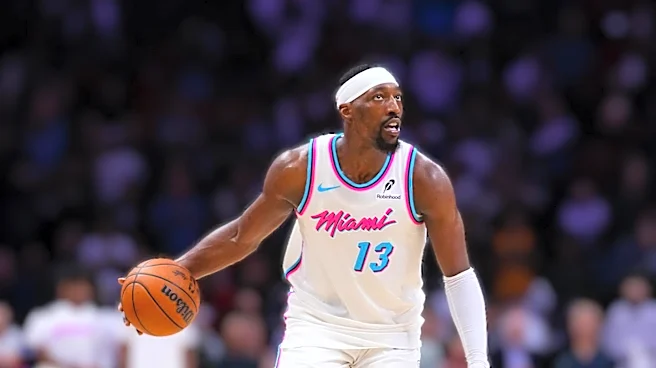
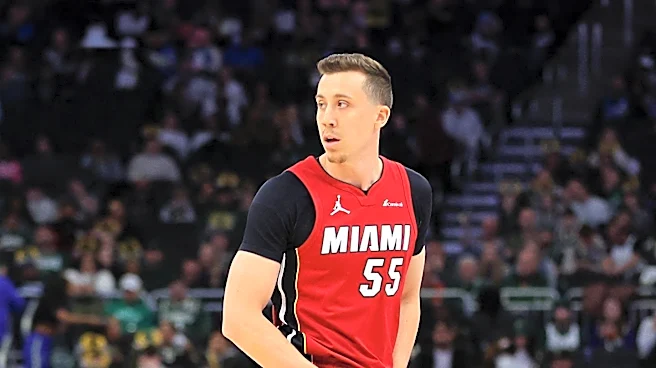
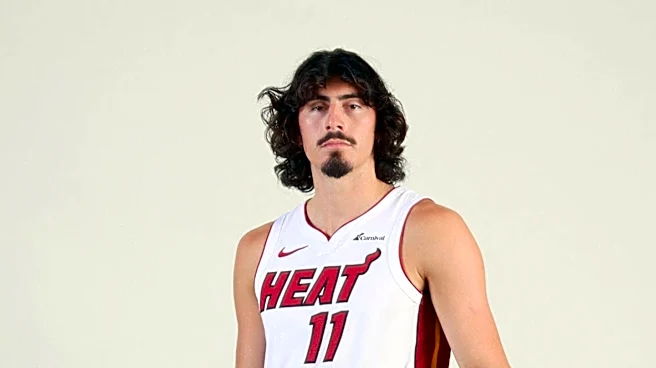
the potential impact of Antetokounmpo's presence. Despite this, the team is not yet considered the favorite, as they still trail behind several other NBA teams. The primary concern for the Heat is their backcourt, which lacks the shooting and quickness needed to complement their strong frontcourt, including Antetokounmpo and Bam Adebayo. The Heat's ability to maintain a dominant defensive frontcourt is acknowledged, but questions remain about their half-court offense capabilities.
Why It's Important?
The acquisition of Giannis Antetokounmpo is a strategic move that could significantly alter the competitive landscape of the NBA. For the Miami Heat, this trade represents an opportunity to strengthen their championship aspirations. Antetokounmpo's ability to enhance the team's transition game is a notable advantage. However, the Heat's success will depend on addressing their backcourt deficiencies, which could hinder their performance in critical moments. The trade highlights the ongoing need for teams to balance star power with a well-rounded roster to achieve sustained success. The outcome of this trade will be closely watched by other NBA teams and could influence future team-building strategies.
What's Next?
The Miami Heat will need to focus on improving their backcourt to maximize the benefits of acquiring Giannis Antetokounmpo. This may involve exploring additional trades or player development to enhance their shooting and quickness. The team's performance in the upcoming season will be a test of their ability to integrate Antetokounmpo effectively and address existing weaknesses. The Heat's management and coaching staff will likely evaluate their roster and make necessary adjustments to ensure they remain competitive. The success of this trade could set a precedent for how other teams approach building a championship-caliber roster.