




What's Happening?
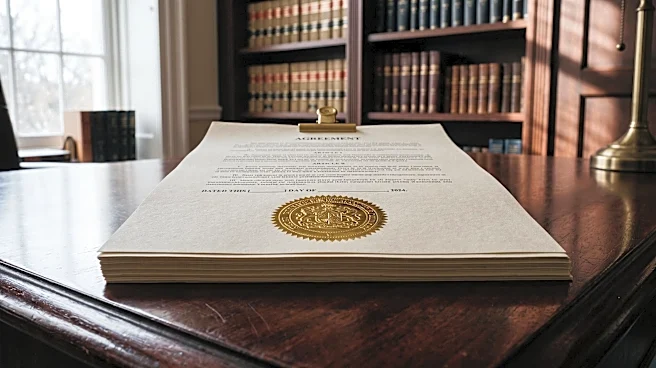
The South Korean K-Pop girl group NewJeans is embroiled in a dispute with their record label, ADOR, over alleged 'slave contracts.' According to investigations by the New York Times, the members signed contracts that reportedly waived their rights to sleep,
rest, and independent decision-making. These contracts also allegedly lacked standard child protection clauses and did not align with the Korean government's contract templates, which include provisions against excessive nudity for minors. The five members, who were between 14 and 17 years old when they signed with ADOR in 2022, unilaterally terminated their contracts two years later. However, a South Korean court ruled that their exclusive contract with ADOR remains valid until 2029. The company reportedly denies these allegations.
Why It's Important?
This case highlights significant concerns within the K-Pop industry regarding artist welfare, particularly for minors, and the ethical implications of contractual agreements. For the U.S. entertainment industry, which increasingly collaborates with K-Pop artists and draws inspiration from its global success, this dispute serves as a cautionary tale. It underscores the potential for exploitative practices in rapidly growing entertainment sectors and the need for robust legal protections for young talent. The controversy could influence how U.S. companies approach partnerships with K-Pop agencies, potentially leading to increased scrutiny of contract terms and artist treatment. It also raises awareness among U.S. consumers and advocacy groups about the darker side of the K-Pop phenomenon, potentially impacting public perception and demand for K-Pop content.
What's Next?
Despite the court ruling upholding their contract until 2029, the ongoing dispute between NewJeans and ADOR is likely to continue to draw public and media attention. The New York Times' reporting has brought international scrutiny to the issue, which could pressure ADOR and other K-Pop agencies to review and potentially revise their contractual practices. This situation may also prompt the Korean government to strengthen regulations concerning artist contracts, especially for minors, to prevent similar future disputes. For NewJeans, their career trajectory remains uncertain as they navigate the legal and public relations challenges while still bound by their existing contract. The outcome of this dispute could set a precedent for future artist-agency relationships in the K-Pop industry.
Beyond the Headlines
The 'slave contract' allegations against ADOR and NewJeans delve into the broader ethical landscape of the global entertainment industry, particularly concerning the exploitation of young talent. This issue transcends K-Pop, resonating with similar concerns raised in other music industries worldwide. It highlights the power imbalance between aspiring artists, often minors, and powerful entertainment corporations. The case also touches upon cultural differences in labor laws and contractual norms, where what might be considered exploitative in one jurisdiction could be permissible in another. The public's reaction, fueled by social media, plays a crucial role in shaping the narrative and potentially influencing legal and corporate decisions, demonstrating the growing power of fan activism in advocating for artist rights and welfare.