
What's Happening?
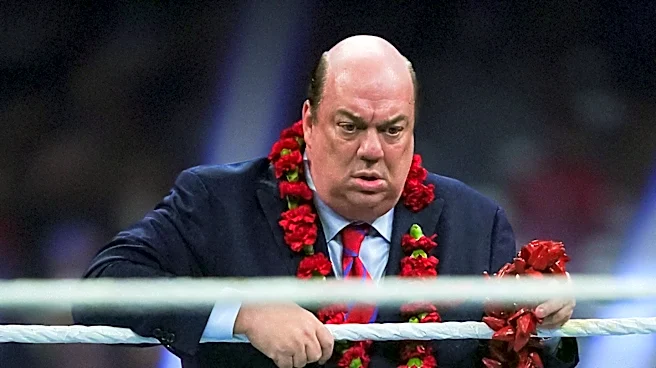
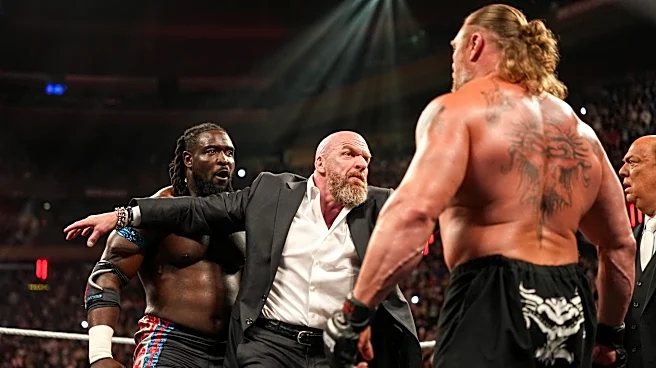
WWE Hall of Famer Paul Heyman recently discussed the distinct leadership styles of Vince McMahon and Paul 'Triple H' Levesque in an interview on 'In Depth with Graham Bensinger.' Heyman, who has worked
extensively with both executives, characterized McMahon as a 'dictator' who viewed the company as 'his show' due to his financial investment. According to Heyman, pitching ideas to McMahon involved convincing him to adopt them as his own, a dynamic he described as a 'constant chase.' In contrast, Heyman described Levesque as a 'collaborator' and 'the best editor' he has ever worked with. Levesque, unlike McMahon, is portrayed as entering creative discussions without preconceived notions, instead focusing on listening to and working with smart individuals who bring diverse ideas. This shift represents a significant change in the creative process within WWE.
Why It's Important?
This insight into the leadership dynamics within WWE is important for understanding the creative direction and operational philosophy of one of the world's leading entertainment companies. The transition from Vince McMahon's dictatorial approach to Paul 'Triple H' Levesque's collaborative style signifies a potential evolution in how content is developed and presented to a global audience. For fans, this could mean a more diverse and innovative product, as creative teams are empowered to contribute more freely. For industry professionals, it highlights a shift towards a more inclusive and less top-down management model, which could influence talent retention and overall morale. The change in leadership philosophy also reflects broader trends in corporate governance, where collaboration and diverse input are increasingly valued over singular authoritarian control, potentially impacting the long-term sustainability and appeal of the WWE brand.
What's Next?
The shift in creative leadership under Paul 'Triple H' Levesque is expected to continue shaping WWE's programming and storytelling. This collaborative approach could lead to more experimental storylines, character development, and match formats, as creative teams feel more empowered to pitch and develop their ideas. Audiences may see a more varied product that caters to a wider range of tastes, potentially attracting new viewers while retaining existing fans. The emphasis on collaboration could also foster a more positive working environment for talent and creative staff, potentially leading to higher quality output and greater innovation within the company. Future programming and talent acquisitions will likely reflect Levesque's vision, which prioritizes collective input and a willingness to evolve beyond traditional methods.
Beyond the Headlines
The contrasting leadership styles described by Paul Heyman offer a fascinating case study in corporate management within the entertainment industry. Vince McMahon's 'dictator' approach, while successful for decades, represents a more traditional, top-down model where ultimate authority rests with a single individual. This model can lead to rapid decision-making and a consistent vision, but it can also stifle creativity and lead to burnout among staff. Paul 'Triple H' Levesque's collaborative style, on the other hand, reflects a modern management philosophy that values diverse perspectives and shared ownership of ideas. This approach can foster innovation, improve employee engagement, and lead to a more adaptable organization. The success of Levesque's model in WWE could serve as a benchmark for other entertainment companies navigating similar leadership transitions, highlighting the potential benefits of moving towards more inclusive and collaborative creative processes in a rapidly changing media landscape.