







What's Happening?
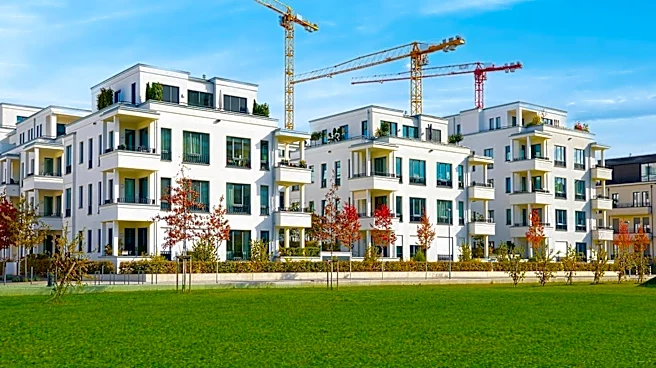
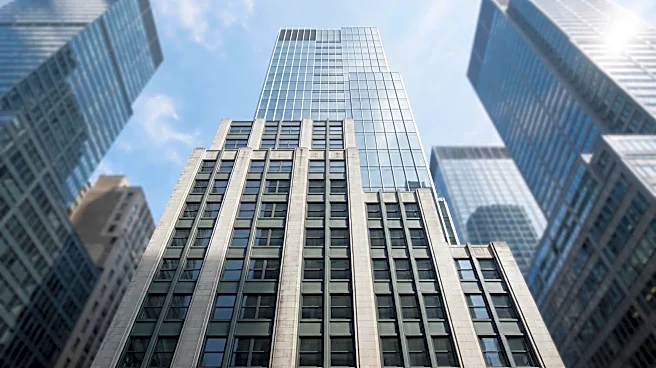
Rudin Management Co. is undertaking a significant office-to-residential conversion project at 355 Lexington Ave. in Midtown, New York City. The 1959-built structure is being expanded with four additional floors and approximately 280,000 square feet, creating
297 market-rate and affordable apartments. This initiative highlights the growing trend of sustainable adaptive reuse in urban development, particularly as office-to-housing conversion rates increase. A key focus of the project is the extensive reuse of existing building components, which is crucial for achieving high embodied carbon reuse scores and LEED certification. Hrisa Gatzoulis, Vice President of Sustainability at Rudin, emphasized that the biggest sustainability factor for conversions is the extent to which the original building can be repurposed. The project team meticulously inventoried materials to determine what could be reused, recycled, or salvaged, navigating challenges such as contaminated materials while maximizing the circularity component.
Why It's Important?
This project is important as it exemplifies a sustainable approach to urban development, addressing both housing needs and environmental concerns in a major U.S. city. The emphasis on material reuse and circularity in construction sets a precedent for future adaptive reuse projects, demonstrating how older buildings can be revitalized with a reduced environmental footprint. The project's pursuit of LEED certification, particularly under the new LEED v5 Building Design and Construction rating, showcases how sustainable practices are being integrated into large-scale developments. Tanya Eagle, Director of Sustainable Buildings at JLL, noted that LEED v5 heavily rewards material reuse, offering maximum multi-attribute scores. This incentivizes developers to prioritize environmental responsibility, potentially influencing industry standards and encouraging more widespread adoption of sustainable building practices across the U.S. The conversion also contributes to New York City's housing supply, including affordable units, aligning with broader urban planning goals.
What's Next?
The successful execution of projects like 355 Lexington Ave. could lead to increased adoption of sustainable conversion strategies in other U.S. cities facing similar challenges of aging office buildings and housing shortages. New York City's 'City of Yes' zoning law changes, which facilitated this conversion by easing restrictions on renewable energy generation and building retrofitting, are likely to serve as a model for other municipalities. Continued collaboration among design-construction teams, general contractors, and tradespeople will be essential to integrate deconstruction with labor, safety, and logistics needs, as highlighted by Hrisa Gatzoulis. The project's progress will be closely watched by the sustainable building community, potentially influencing future policy decisions and investment in adaptive reuse. The focus on stakeholder engagement and celebrating small wins, as mentioned by Gatzoulis, suggests a collaborative approach that could become a best practice for large-scale sustainable developments.
Beyond the Headlines
The Rudin Management Co. project at 355 Lexington Ave. extends beyond a simple building conversion; it represents a shift in how urban infrastructure is viewed and developed. The emphasis on material circularity and the integration of sustainability from the initial planning stages reflect a growing awareness of the environmental impact of construction. This development also touches upon the ethical implications of resource consumption and waste generation in the building industry. By demonstrating that significant portions of existing structures can be reused, the project challenges the traditional 'demolish and rebuild' paradigm, promoting a more responsible and resource-efficient approach. The involvement of various stakeholders, from manufacturers with take-back programs to the entire project team, underscores the complex, multi-faceted nature of achieving true sustainability in large-scale urban projects. This could foster a cultural change within the construction industry towards greater environmental stewardship and collaborative problem-solving.