


What's Happening?
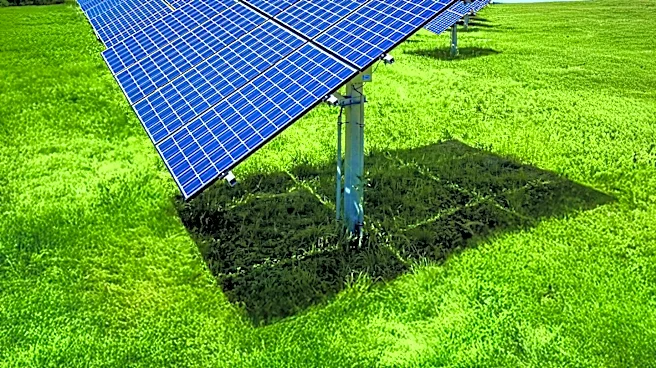
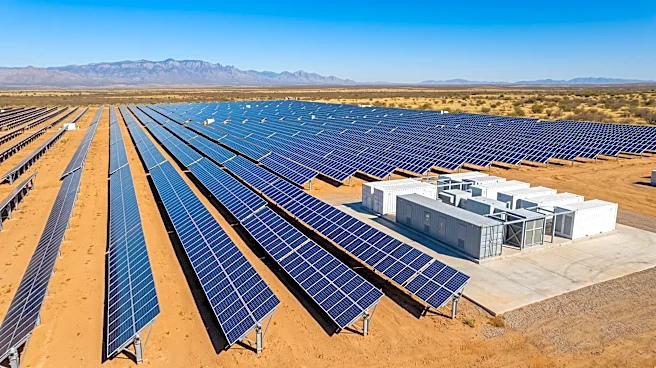
Duke Energy's PowerPair NC rebates program is providing up to $9,000 in upfront savings for North Carolina residential customers who install solar panels paired with certified battery storage solutions. This pilot program, administered by Duke Energy Carolinas
(DEC) and Duke Energy Progress (DEP), aims to reduce peak load demands on the electric grid during high-demand periods. To qualify, homeowners must meet specific solar sizing and component matching requirements, working with an approved solar installer from Duke's Trade Ally Network. The rebate is calculated based on the total direct current (DC) rating of the solar modules ($0.36 per watt-DC, capped at 10 kW-DC for a maximum solar rebate of $3,600) and the usable capacity of the battery ($400 per kWh, capped at 13.5 kWh for a maximum battery rebate of $5,400). These utility rebates can be stacked with the 30% federal investment tax credit (ITC), significantly reducing total installation costs.
Why It's Important?
The Duke Energy PowerPair program is a significant development for North Carolina homeowners, offering substantial financial incentives that can reduce the overall cost of solar-plus-battery systems by more than 50% when combined with the federal ITC. This initiative not only makes renewable energy more accessible and affordable for residents but also plays a crucial role in enhancing grid stability and resilience. By incentivizing distributed battery systems, Duke Energy can better manage peak electricity demands, especially during extreme weather conditions, and integrate more renewable energy into its network. This program aligns North Carolina with other states that have advanced net energy metering policies and battery integrations, fostering a more modern and sustainable energy infrastructure. The requirement to work with approved installers ensures system quality and compliance, while the pilot nature allows for evaluation and potential expansion of such demand-response programs.
What's Next?
Homeowners interested in the PowerPair program must apply through structured application lottery windows due to its limited capacity. They need to work with an approved solar installer to ensure their system configuration meets Duke Energy's sizing and documentation requirements. Applicants can choose between two pathways: Cohort A (customer-controlled battery operation with upfront rebate) or Cohort B (utility-controlled battery operation with upfront rebate and additional monthly bill credits). The program's success and impact on grid stability will likely influence future utility incentive programs and regulatory frameworks in North Carolina and potentially serve as a model for other states. Homeowners should stay informed about program updates and consult with certified installers to navigate the technical and financial aspects of participation.
Beyond the Headlines
The Duke Energy PowerPair program represents a strategic shift in how utilities manage energy demand and integrate renewable resources. By incentivizing behind-the-meter battery storage, utilities are moving towards a more decentralized and responsive grid model. This approach not only benefits individual homeowners through cost savings and energy independence but also provides a valuable resource for grid operators, reducing the need for costly peaker plants and infrastructure upgrades. The program's dual-cohort structure, offering both customer-controlled and utility-controlled options, highlights the evolving relationship between consumers and utilities, where data and control over energy assets become central. This model could pave the way for more sophisticated virtual power plant (VPP) initiatives, where aggregated residential battery systems act as a collective resource for the grid, further enhancing energy security and sustainability. The ethical implications of utility control over home energy assets, even with compensation, will be an ongoing discussion.