


What's Happening?
Christa Fairbrother, an internationally recognized aqua yoga coach and trainer, has provided insights into the effective use of aqua exercise fins, specifically Aqualogix fins, for enhancing aquatic workouts. These fins are designed as drag pieces of equipment,
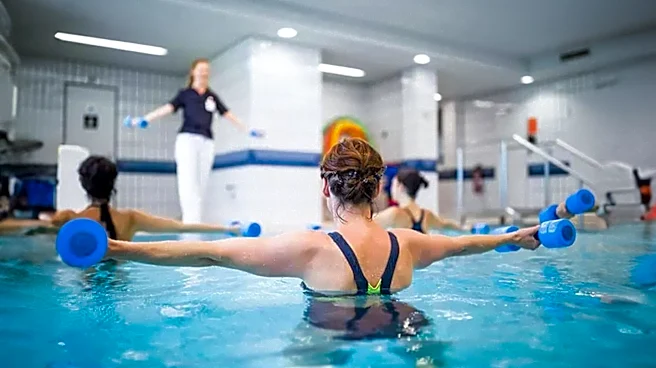
meaning they only exert force on the body when a limb moves through the water. Fairbrother demonstrated how these fins can be used for exercises like straight leg lifts, which create a long lever action to build hip strength. However, she noted that for individuals with arthritis, this might cause torque on the knee, suggesting a short lever action as an alternative, though it reduces the drag effect. She highlighted the effectiveness of using fins for circumduction movements, such as making arcs with the leg in a bent-knee chair pose, which significantly engages hip muscles against the water's resistance. Additionally, Fairbrother explained how combining fins with other gear, like pool noodles, can create more dynamic and challenging full-body workouts, such as transitioning between reverse plank and side plank positions while moving through the water. The focus is on building strength and improving movement through water resistance.
Why It's Important?
The integration of specialized equipment like aqua exercise fins into aquatic fitness routines offers significant benefits for a diverse range of individuals, particularly those seeking low-impact yet effective strength training. For people with conditions like arthritis, the buoyancy of water combined with the controlled resistance from fins allows for muscle strengthening without the high impact on joints that land-based exercises often entail. This can lead to improved mobility, reduced pain, and enhanced overall physical function. The emphasis on circumduction and dynamic movements with fins can also improve functional movement patterns, which are crucial for daily activities and maintaining independence. Furthermore, the ability to combine these fins with other aquatic gear, such as pool noodles, expands the versatility of water workouts, making them adaptable to various fitness levels and goals. This approach to exercise can contribute to better long-term health outcomes by promoting consistent physical activity in a supportive environment, potentially reducing the risk of injuries and improving quality of life for participants.
What's Next?
As awareness and accessibility of specialized aquatic fitness equipment like aqua exercise fins grow, it is likely that more fitness centers and aquatic programs will incorporate them into their offerings. Trainers and coaches may develop new routines and exercises specifically designed to maximize the benefits of these tools, catering to different fitness levels and specific health conditions. There could also be an increase in educational content, such as online tutorials and workshops, to teach individuals how to safely and effectively use these fins for personal workouts. Manufacturers might continue to innovate, developing new designs or materials for aquatic fitness equipment to further enhance performance and user comfort. Additionally, research into the specific physiological benefits of using such equipment for various populations, including those with chronic conditions, could lead to more targeted and evidence-based aquatic therapy and fitness programs.
Beyond the Headlines
The growing popularity of aqua exercise fins and similar aquatic fitness tools reflects a broader trend towards personalized and adaptive exercise solutions. This development highlights a shift in fitness philosophy, moving beyond generic workouts to embrace methods that cater to individual needs, physical limitations, and preferences. The emphasis on low-impact, high-resistance training in water underscores a recognition of the importance of joint health and injury prevention, particularly as the population ages. Ethically, this trend promotes inclusivity in fitness, allowing individuals who might be sidelined by land-based exercises due to pain or mobility issues to engage in meaningful physical activity. Culturally, it challenges the traditional perception of exercise as solely high-intensity or high-impact, advocating for a more holistic and sustainable approach to physical well-being. The long-term implication is a more accessible and diverse fitness landscape, where water-based activities play an increasingly central role in promoting health and longevity.