




What's Happening?
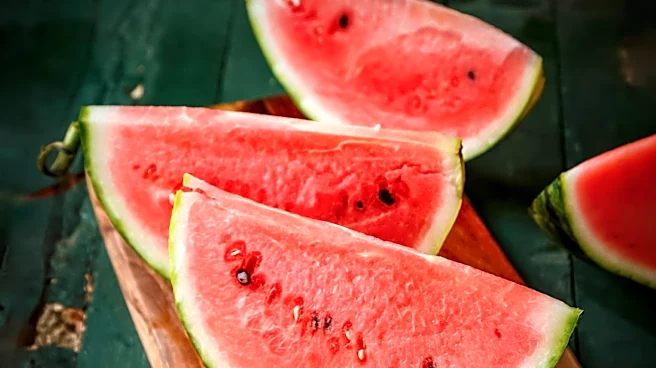
The proper storage of watermelon is crucial to maintain its freshness and prevent spoilage, especially when left out for extended periods. The shelf life of watermelon is influenced by environmental factors such as temperature and humidity. Generally,
watermelon can remain safe at room temperature for a few hours. However, for longer durations, it is essential to store it in a cool, dry place. Once cut, watermelon should be refrigerated promptly in an airtight container to extend its freshness. Regular inspection for signs of spoilage, such as a slimy texture or an unpleasant odor, is recommended, and any spoiled fruit should be discarded immediately to avoid foodborne illness.
Why It's Important?
Understanding proper food storage, particularly for produce like watermelon, is vital for public health and household economics. Improper storage can lead to the rapid growth of bacteria, increasing the risk of foodborne illnesses, which can range from mild discomfort to severe health complications. For consumers, this knowledge helps prevent unnecessary food waste, saving money and contributing to more sustainable consumption practices. For businesses in the food industry, adhering to these guidelines is critical for food safety compliance, maintaining product quality, and protecting their reputation. Educating the public on these simple tips empowers individuals to make informed decisions about food handling.
What's Next?
Consumers are advised to integrate these storage practices into their daily routines, especially during warmer months or when planning outdoor events. Retailers and food service providers may continue to emphasize food safety guidelines for fresh produce through labeling or informational campaigns. Ongoing research into food preservation techniques could lead to new methods or products that further extend the shelf life of fruits like watermelon, potentially reducing waste across the supply chain. Public health organizations will likely continue to issue recommendations and warnings regarding food safety to prevent outbreaks of foodborne illnesses.
Beyond the Headlines
The discussion around watermelon storage highlights broader issues in food safety and waste management. In a society increasingly focused on sustainability, minimizing food waste is a significant challenge. Simple practices like proper refrigeration and timely consumption play a large role in this effort. Furthermore, the emphasis on checking for spoilage underscores the importance of sensory evaluation in food safety, a skill that is often overlooked in an age of packaged and processed foods. This seemingly minor topic touches upon the larger societal goal of ensuring safe, accessible, and sustainable food systems for all.