







What's Happening?
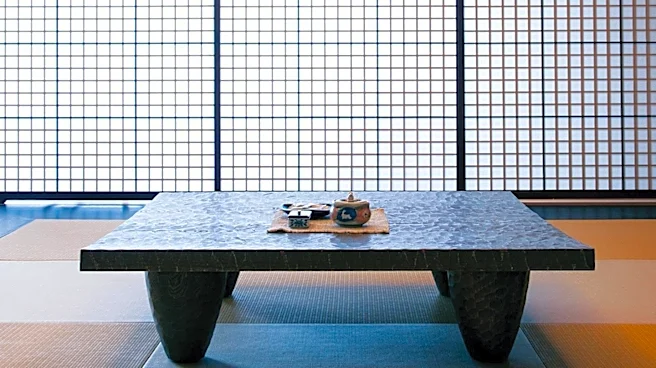
Japanese minimalism, deeply rooted in Zen philosophy and the practicalities of compact living, emphasizes simplicity, restraint, and the use of empty space. This cultural approach to living has gained global attention, popularized by figures like Marie
Kondo and Fumio Sasaki. The practice of Danshari, which involves refusing unnecessary items, disposing of clutter, and detaching from material possessions, is central to this minimalist lifestyle. Japanese homes often incorporate multi-purpose spaces and natural, muted palettes to create calm and efficient environments. The minimalist trend extends beyond physical spaces to digital decluttering, promoting a streamlined lifestyle.
Why It's Important?
The minimalist trend offers a counterbalance to consumerism, encouraging individuals to focus on what truly matters and reduce waste. This approach can lead to mental clarity and a more sustainable lifestyle, as it emphasizes quality over quantity. In the U.S., where consumer culture is prevalent, adopting minimalist principles can help reduce environmental impact and promote mental well-being. The trend also influences design and architecture, encouraging the creation of functional, aesthetically pleasing spaces that enhance daily living.