




What's Happening?
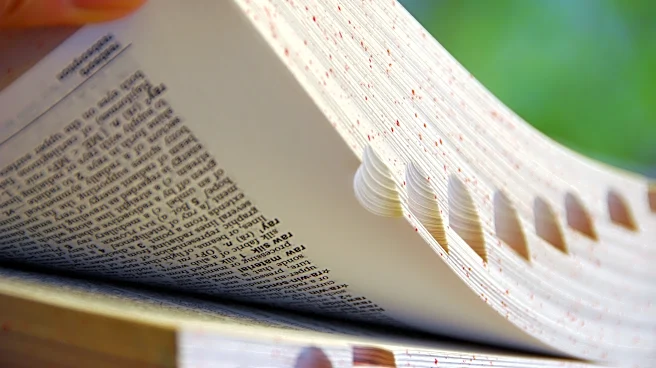
Merriam-Webster has announced the addition of 1,400 new words and definitions to its dictionary, a process the company refers to as 'wordmaxxing.' These new entries are selected based on their widespread and meaningful use over time, offering a snapshot
of current language and societal trends. Among the newly included terms are 'looksmaxxing,' 'parasocial,' 'Rickroll,' and 'meme coin,' which largely reflect the influence of social media culture. Other additions include 'cuffing season,' describing a period when individuals seek romantic partners, and 'crashout.' Merriam-Webster has a history of regularly updating its dictionary to incorporate modern phrases and terms that emerge from pop culture and digital spaces, adhering to criteria of frequent, widespread, and meaningful usage.
Why It's Important?
The continuous updating of the Merriam-Webster dictionary is a significant cultural and linguistic event, as it formally acknowledges and legitimizes the evolution of the English language. The inclusion of terms like 'looksmaxxing' and 'meme coin' highlights the profound impact of digital culture and social media on everyday communication and societal norms. This expansion reflects how rapidly new concepts and behaviors are integrated into the lexicon, particularly among younger generations. For educators, writers, and communicators, these additions provide a clearer understanding of contemporary vocabulary, ensuring that dictionaries remain relevant and comprehensive resources. It also underscores the dynamic nature of language, demonstrating how it adapts to technological advancements, social shifts, and emerging cultural phenomena, thereby influencing how we understand and interpret the world around us.
What's Next?
The newly added words will be integrated into Merriam-Webster's online and print editions, making them accessible to a wider audience. This update will likely spark public discussion and interest in the origins and meanings of these new terms, further solidifying their place in common usage. Language enthusiasts, educators, and the general public will engage with these additions, potentially leading to increased awareness and adoption of these words. Merriam-Webster will continue its ongoing process of monitoring language use, with future updates expected to reflect further linguistic developments driven by technological innovation, cultural shifts, and global interactions. The dictionary's role as a living document will persist, adapting to the ever-changing landscape of communication.
Beyond the Headlines
The addition of 1,400 words to the Merriam-Webster dictionary goes beyond mere linguistic cataloging; it serves as a cultural barometer, reflecting deeper societal shifts and values. Terms like 'parasocial' highlight evolving human relationships in the digital age, where interactions with public figures often lack reciprocity. 'Cuffing season' speaks to seasonal patterns in human connection and the search for companionship. The formal recognition of these terms by a venerable institution like Merriam-Webster validates their cultural significance and provides a historical record of how society communicates and conceptualizes its experiences. This ongoing linguistic evolution also raises questions about the future of language, the influence of digital platforms on communication, and how new generations will continue to shape and redefine the boundaries of English. It underscores the idea that language is not static but a fluid entity, constantly adapting to reflect the complexities of human experience.