



What's Happening?
The wellness tourism industry is experiencing a significant shift, moving away from traditional maximalist luxury towards 'Bare Luxury' and minimalism, particularly for 'maximalist optimizers' in North America. This trend emphasizes space, silence, and natural
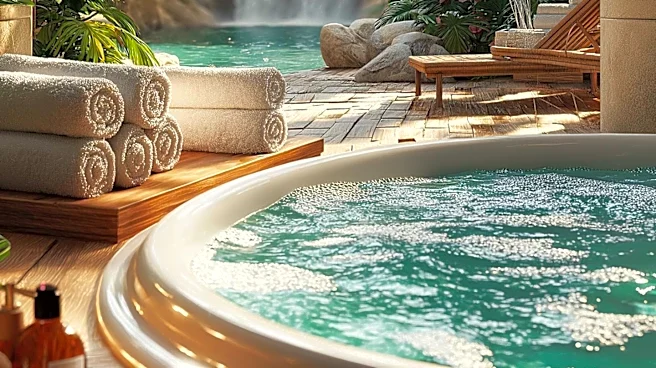
environments, with resorts like Soneva explicitly adopting a 'Bare Luxury' approach to foster joy and presence by removing excess stimulation. Consumers are increasingly seeking digital detox experiences, with research indicating a desire to reduce social media use during holidays and a rise in searches for unplugged, tech-lite properties. Corporate-backed bathing houses and social wellness clubs, such as Othership and Bathhouse in North America, are also emerging, catering to health optimizers interested in heat therapy, contrast bathing, and recovery-focused practices. This indicates a growing consumer interest in intentional wellness offerings that prioritize genuine well-being over superficial extravagance.
Why It's Important?
This trend signifies a broader societal shift in how individuals, particularly in the U.S., perceive and pursue well-being. The move towards 'Bare Luxury' and digital detox reflects a growing recognition of the negative impacts of constant stimulation and digital overload on mental and physical health. For the U.S. tourism and hospitality industries, this means a need to re-evaluate offerings, focusing on creating environments that promote genuine relaxation, mindfulness, and connection with nature. Businesses that adapt to this demand by providing tech-lite options, serene spaces, and experiences that encourage disconnection will likely gain a competitive advantage. Conversely, those that continue to prioritize excessive amenities and constant connectivity may find themselves out of sync with evolving consumer preferences. This shift also highlights a potential economic opportunity for regions and businesses that can offer authentic, stripped-back wellness experiences, moving beyond generic wellness programming to more personalized and impactful offerings.
What's Next?
The wellness tourism industry is expected to continue its rapid growth, projected to reach $2.4 trillion by 2035. This growth will likely be driven by further differentiation in offerings, with a strong emphasis on intentional and personalized experiences. We can anticipate more resorts and destinations implementing 'no-screen' policies and designing spaces that encourage engagement with nature and quiet reflection. The expansion of corporate-backed social wellness clubs and bathing houses in North America is also likely to continue, as institutional capital flows into this burgeoning sector. Consumers will increasingly seek out destinations that support their existing wellness endeavors, demanding more considered approaches than generic 'gym and granola' programs. This will push brands to innovate in areas like longevity and preventive health travel, offering outcome-driven stays with biomarker tracking and personalized health protocols. The juxtaposition of this stripped-back luxury with the push for automation in other segments of the industry suggests a bifurcated market, where consumers will choose experiences based on their specific wellness goals.
Beyond the Headlines
The rise of 'Bare Luxury' and digital detox in wellness tourism points to deeper cultural and psychological implications. It suggests a collective yearning for simplicity and authenticity in an increasingly complex and digitally saturated world. This trend challenges the traditional notion of luxury, redefining status not by material possessions or extravagant displays, but by access to space, silence, and freedom from constant stimulation. Ethically, it raises questions about the responsibility of the tech industry and society at large to address digital overload and its impact on well-being. The emphasis on 'nervous-system care' and 'hushpitality' reflects a growing awareness of the physiological toll of modern life. This shift could lead to a broader re-evaluation of work-life balance, technology use, and the pursuit of genuine human connection, potentially influencing urban planning, workplace design, and educational approaches in the long term. It underscores a fundamental human need for restorative environments and experiences that foster inner peace and presence.