

What's Happening?
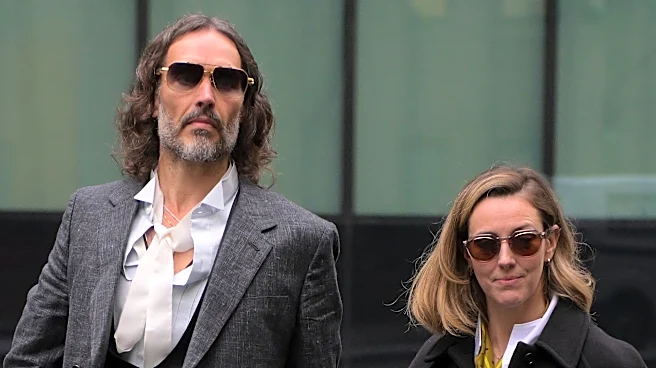
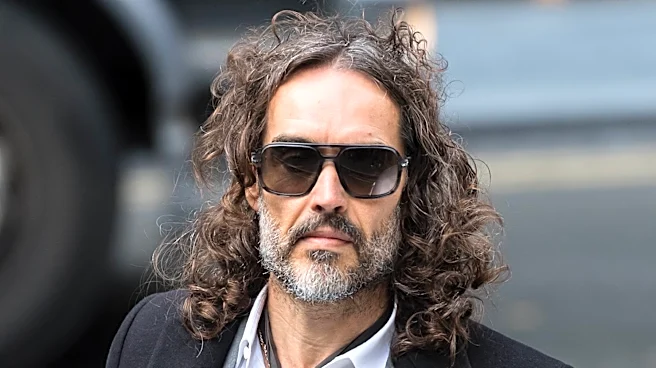
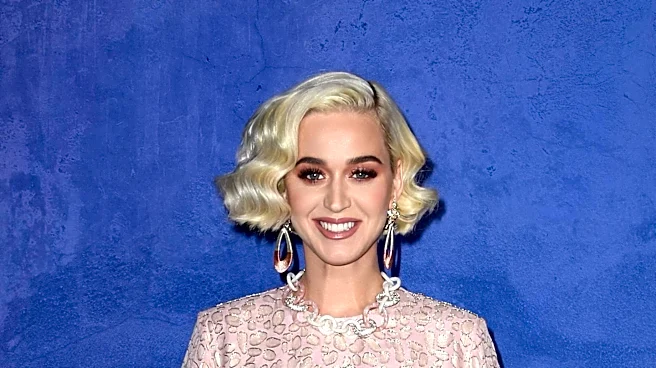
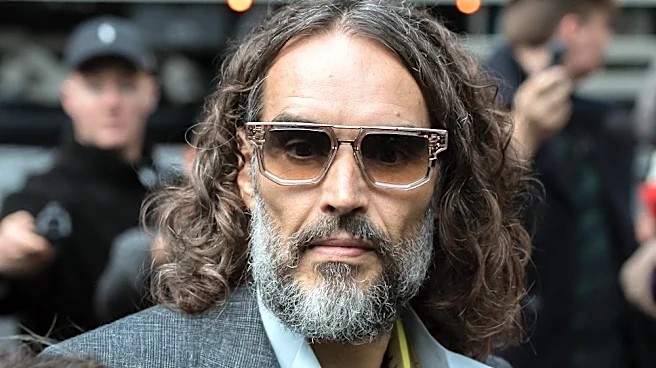
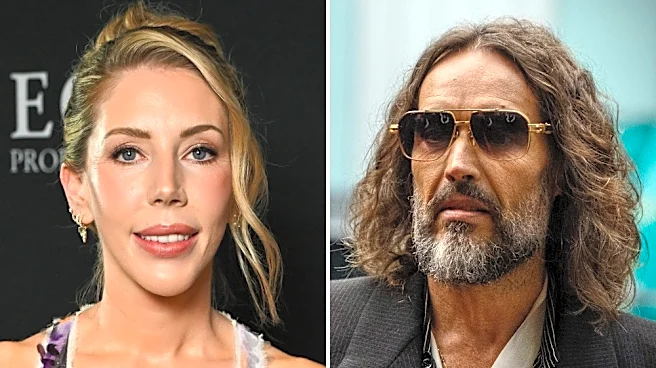
Katy Perry's name was not brought up during the recent London trial of her ex-husband, Russell Brand, who was found guilty of three counts of sexual assault and one count of rape. Prosecutors had initially considered discussing matters related to Brand's
post-2009 relationship with Perry, acknowledging the sensitivity of such information. However, Brand's lawyers successfully prevented this from happening. Prosecutor Riel Karmy-Jones KC stated in a pre-trial note that the prosecution was content to remove these matters from the opening statement. Additionally, David Roberts, a senior crown prosecutor, confirmed that all reasonable lines of inquiry relevant to the specific charges were covered, and Perry was not asked to provide a witness statement. Perry and Brand were married from October 2010 to December 2011, with their divorce finalized in July 2012.
Why It's Important?
The exclusion of Katy Perry from Russell Brand's trial, despite their past marriage and initial prosecutorial consideration, highlights the legal and ethical complexities surrounding high-profile cases involving celebrities. It underscores the careful balance prosecutors must strike between presenting all relevant information and avoiding extraneous details that could sensationalize a trial or unfairly prejudice a jury. The decision to omit Perry's involvement suggests a focus on the specific charges and evidence directly related to the alleged sexual offenses, rather than broader aspects of Brand's personal life. This approach aims to ensure a fair trial based on pertinent facts. For public figures like Perry, it also demonstrates the legal system's capacity to protect their privacy, even when their past relationships are with individuals facing serious accusations. The case also implicitly raises questions about the scope of evidence admissible in court and the boundaries of public interest versus personal privacy.
What's Next?
With Russell Brand found guilty, the legal proceedings will move towards sentencing. The decision to exclude Katy Perry's testimony or details of their relationship from the trial indicates a clear legal strategy to focus solely on the criminal charges at hand. This approach is likely to be maintained throughout any appeals or further legal actions. For Katy Perry, this outcome means her past relationship with Brand will likely remain outside the direct legal narrative of his conviction, allowing her to maintain a degree of privacy. The broader implications for Brand's career and public image are significant, given the severity of the convictions. The case will continue to be a focal point in discussions about accountability for sexual misconduct in the entertainment industry.
Beyond the Headlines
The absence of Katy Perry's testimony in Russell Brand's trial, despite their high-profile past, subtly underscores the distinction between public narrative and legal evidence. In an age where celebrity relationships are often intensely scrutinized, the court's decision to exclude her involvement reinforces the principle that legal proceedings are bound by relevance to the specific charges, not public curiosity. This raises questions about how the legal system navigates the intersection of celebrity, privacy, and justice, particularly in cases of sexual assault where victims' and witnesses' privacy is paramount. It also highlights the potential for a 'media trial' to diverge significantly from the actual legal process, with the public often expecting all aspects of a celebrity's life to be laid bare. The case, therefore, serves as a reminder of the controlled environment of a courtroom versus the expansive, often speculative, realm of public opinion.