

What's Happening?
GE Vernova, a key player in power generation equipment and grid hardware, is confronting significant delivery challenges as its order backlog has swelled to $197 billion as of October 28. This represents a $20 billion sequential increase, with management
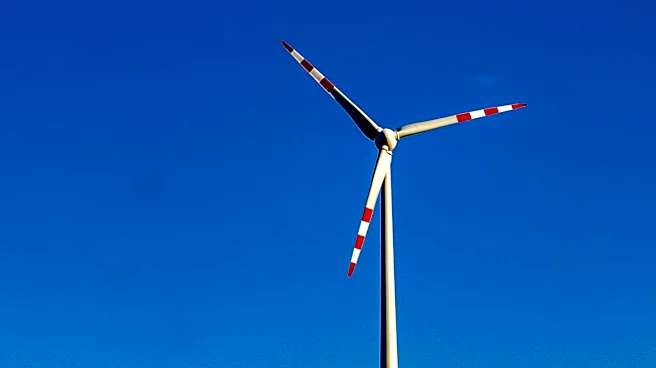
anticipating it to surpass $200 billion in the fourth quarter. The company's expanding order book is largely driven by the growing power requirements of data centers, fueled by the AI expansion. Despite this robust demand, concerns are rising about the efficiency of GE Vernova's manufacturing facilities in converting these commitments into actual deliveries. The company is also actively pursuing expansion through acquisitions, notably a proposed $9 billion purchase of Trench Group, which aims to bolster its high-voltage grid equipment offerings. This acquisition is expected to close in late 2027, pending regulatory approvals. However, supply constraints, potential delivery delays, and ongoing issues within its wind business could impede the conversion of its substantial backlog into stronger earnings.
Why It's Important?
GE Vernova's ability to efficiently manage its massive backlog and execute on deliveries is crucial for the broader energy sector and the ongoing energy transition in the U.S. As demand for electricity, particularly from data centers supporting AI, continues to surge, the timely provision of power-generation equipment and grid infrastructure becomes paramount. Delays in GE Vernova's output could slow down critical infrastructure development, impacting the reliability and capacity of the U.S. power grid. Furthermore, the company's strategic acquisitions, like the planned purchase of Trench Group, signify a consolidation trend in the energy technology market, aiming to strengthen supply chains and expand capabilities in high-voltage equipment. The success of these integrations and the resolution of manufacturing bottlenecks will directly influence the pace at which the U.S. can modernize its energy infrastructure and meet increasing power demands, especially in the context of decarbonization efforts and the growing reliance on renewable energy sources.
What's Next?
Looking ahead, GE Vernova's immediate focus will be on optimizing its manufacturing processes to improve delivery efficiency and convert its substantial backlog into revenue. Investors and industry observers will closely monitor the company's progress in addressing supply constraints and resolving issues within its wind business. The proposed $9 billion acquisition of Trench Group will proceed through regulatory approval processes, with an expected closing in late 2027. This integration will be a key factor in GE Vernova's long-term strategy to enhance its high-voltage grid equipment portfolio. The company's performance in 2027 will largely depend on its ability to navigate these operational and strategic challenges, ensuring that its growing order book translates into sustainable growth and strengthens its position in the evolving energy landscape. The broader market will also be watching for any ripple effects on the availability and cost of power infrastructure components.
Beyond the Headlines
The challenges faced by GE Vernova highlight a broader systemic issue within the energy infrastructure sector: the capacity of manufacturing and supply chains to keep pace with rapidly accelerating demand, particularly driven by technological advancements like AI. This situation underscores the critical need for robust industrial policies and investments in manufacturing capabilities to support the energy transition and digital transformation. The reliance on a few major players for essential grid components also raises questions about supply chain resilience and potential vulnerabilities. Furthermore, the ongoing issues in the wind business, despite the overall push for renewables, point to the complexities and inherent challenges in scaling up new energy technologies. This scenario could prompt a re-evaluation of manufacturing strategies, potentially leading to increased domestic production or diversification of suppliers to mitigate future risks and ensure energy security and reliability in the U.S.