







What's Happening?
The Themes China Generative Artificial Intelligence ETF (DRGN), a passively managed, non-diversified thematic ETF, tracks the BITA China Generative AI Select Index, focusing on approximately two dozen Chinese companies involved in generative AI. The fund's
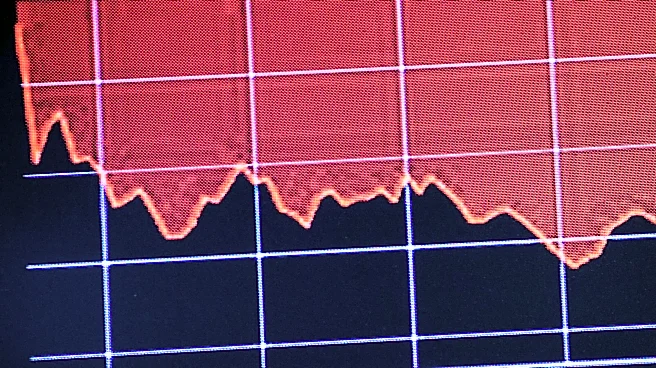
portfolio is heavily concentrated in technology, with about 78% of its assets in AI chips, servers, and supporting infrastructure. Key holdings include semiconductor companies like Hygon Information Technology, Montage Technology, and Cambricon Technologies, alongside internet and hardware leaders such as Baidu and Xiaomi. Recently, DRGN has experienced significant volatility, declining by about 23% over the past three months, though the pace of decline moderated to roughly 5% in the most recent 30 days. This performance reflects broader sector rotation away from Chinese technology and weaker investor sentiment in the AI-hardware complex. The fund's small asset under management (AUM) of approximately $19 million and its non-diversified, single-country thematic structure contribute to lower liquidity and wider trading spreads.
Why It's Important?
The performance of DRGN is significant as it offers concentrated exposure to China's domestic AI hardware buildout, a sector heavily influenced by government policy promoting self-reliance in semiconductors and computing infrastructure. The fund's volatility highlights the inherent risks associated with single-country and sector-specific ETFs, particularly in the context of evolving US-China technology policy and export-control regimes. Investors in DRGN are directly exposed to the earnings cycles and guidance of major Chinese chip and computing companies, making the fund a barometer for investor sentiment towards China's AI supply chain. The fund's heavy hardware tilt means that chip-related volatility tends to drive its near-term behavior, impacting those seeking to capitalize on China's AI growth. Furthermore, the fund's small AUM and non-diversified structure mean that both upside and downside moves can be magnified, posing higher risks for investors.
What's Next?
Several structural factors are expected to shape DRGN's trajectory through 2026. The progress of China's domestic semiconductor sector, particularly in advanced chip design and manufacturing, will directly influence the fund's largest holdings. Government stimulus, industrial policy, and the rate of enterprise AI adoption within China are critical demand drivers for the server and infrastructure companies in the index. Macroeconomic conditions, including interest-rate expectations and global risk appetite for emerging-market equities, will also play a significant role in influencing capital flows into Chinese technology shares. Investors will need to closely monitor any shifts in export-control regimes that could restrict access to advanced components for these companies. The fund's small AUM and concentrated structure will continue to be key considerations, potentially amplifying market movements.
Beyond the Headlines
The performance of ETFs like DRGN extends beyond mere financial returns, reflecting the broader geopolitical and economic dynamics between the U.S. and China. The fund's exposure to China's push for self-reliance in semiconductors underscores the strategic importance of technological independence for major global powers. The volatility experienced by DRGN highlights the challenges and risks associated with investing in sectors heavily influenced by national industrial policies and international trade tensions. This situation also brings to light the ethical considerations surrounding investments in countries with differing regulatory and geopolitical landscapes. The fund's focus on the hardware and infrastructure layers of the AI value chain, rather than consumer-facing applications, points to the foundational nature of these technologies in the global AI race and the potential for long-term shifts in technological leadership.