


What's Happening?
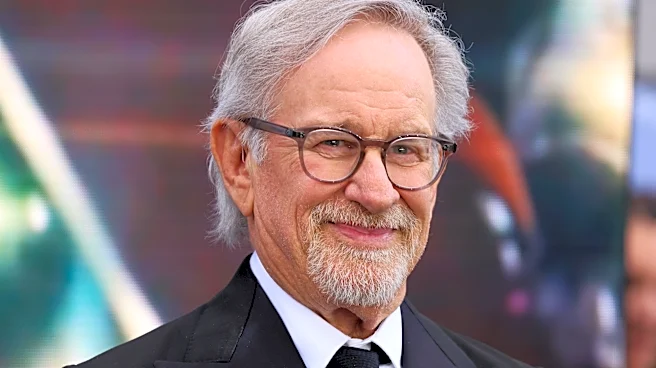
Film-maker Steven Spielberg engaged in multiple collaborations with author Jeffrey Archer, as revealed by Archer in 1986. Despite their professional relationship and Archer's admiration for Spielberg, Archer notably declined to write the novelization
for Spielberg's iconic film 'E.T.' Archer, known for novels like 'Kane and Abel,' expressed that the 'E.T.' project 'just wasn’t me,' indicating a preference for his own distinct writing style and subject matter. This detail emerged during an interview where Archer discussed his writing process and self-perception as a writer, contrasting his work with that of literary figures like Graham Greene and Evelyn Waugh. The interaction highlights a specific instance where a prominent author chose not to adapt a major film, even when approached by a highly respected director.
Why It's Important?
This interaction between Steven Spielberg and Jeffrey Archer offers a glimpse into the creative decisions and professional relationships within the entertainment industry. It underscores the autonomy artists maintain over their work, even when presented with commercially lucrative opportunities. For Spielberg, it shows his willingness to collaborate with diverse talents, while for Archer, it illustrates a commitment to his artistic identity, prioritizing personal fit over potential mainstream success associated with a blockbuster film. This decision could influence how other authors approach film adaptations, emphasizing the importance of creative alignment. It also provides a historical footnote for fans of both Spielberg and Archer, shedding light on a 'what if' scenario regarding the 'E.T.' franchise and its literary extensions.
What's Next?
While the specific interaction regarding the 'E.T.' novelization is historical, the broader implications for creative collaborations in Hollywood remain relevant. Future projects involving major directors and authors will continue to navigate similar considerations of artistic compatibility and personal preference. The anecdote serves as a reminder that not all high-profile opportunities are pursued, and creative integrity often plays a significant role in such decisions. For fans and industry observers, it reinforces the understanding that even established figures like Spielberg and Archer operate within a framework of individual artistic choices, which can shape the trajectory of their respective careers and the projects they undertake.
Beyond the Headlines
The refusal by Jeffrey Archer to novelize 'E.T.' speaks to a deeper aspect of artistic integrity and the challenges of creative adaptation. It highlights the potential tension between a director's vision and an author's voice, even when both are highly acclaimed. This decision could be seen as a testament to Archer's dedication to his unique narrative style, suggesting that some stories are best told in their original medium or by their original creators. It also raises questions about the nature of film novelizations themselves—whether they are primarily commercial ventures or genuine artistic extensions of a film. The anecdote subtly critiques the idea that any successful author can or should adapt any successful film, emphasizing the nuanced and personal nature of creative work.