




What's Happening?
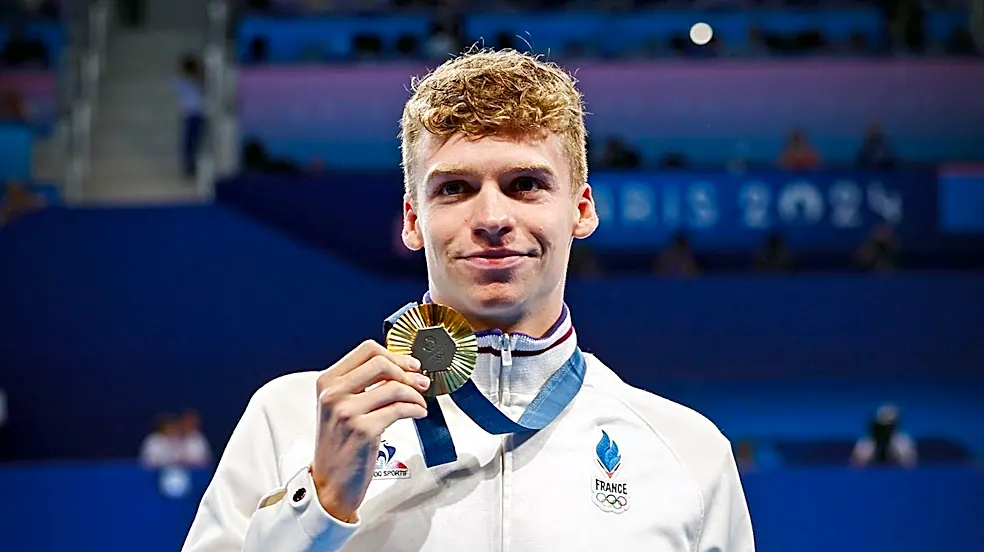
French swimmer Léon Marchand has established four individual Olympic records during the Paris Olympics. These records include performances in the 200 and 400 meters individual medleys. Marchand's achievements highlight a significant shift in the Olympic standard
for these events, demonstrating his dominance in the pool. His success contributes to the overall narrative of new records being set in swimming, with 19 current Olympic swimming records established in Paris 2024 alone. This indicates a period of rapid advancement in the sport, driven by improved techniques, training, and potentially controlled indoor environments that standardize conditions.
Why It's Important?
Marchand's record-breaking performances are important as they redefine the benchmarks for excellence in Olympic swimming. Such achievements inspire future generations of athletes and push the boundaries of human performance. For the U.S. swimming community, these new records set a higher bar for competition, influencing training methodologies and strategic planning for upcoming international events. The continuous breaking of records in swimming, as opposed to the more stable records in some athletics events, suggests that advancements in technique and training are rapidly evolving, requiring U.S. athletes and coaches to constantly adapt and innovate to remain competitive on the global stage. This also impacts the commercial and symbolic weight of Olympic records, guaranteeing visibility and prestige for the athletes and their national Olympic committees.
What's Next?
Following Marchand's record-setting performances, the focus will likely shift to how other nations, including the United States, will respond to these new standards. Competitors will analyze Marchand's techniques and training regimens to identify areas for improvement in their own programs. The upcoming Olympic cycles and World Championships will serve as crucial platforms for athletes to challenge these new records. Additionally, discussions within the swimming community may intensify regarding the factors contributing to the rapid succession of records, such as advancements in sports science, equipment, and training environments. This could lead to further innovations in the sport as athletes and federations strive for even greater achievements.
Beyond the Headlines
Beyond the immediate athletic achievements, Marchand's success underscores the psychological and physiological demands of elite-level competition. The ability to peak under pressure, in front of a global audience, is a testament to mental fortitude and rigorous preparation. The distinction between Olympic records and world records, and the prestige associated with an Olympic mark, highlights the unique value placed on performances achieved during the Games. This cultural significance can influence an athlete's career trajectory, sponsorship opportunities, and public perception. The continuous evolution of records also prompts deeper questions about the limits of human potential and the role of technology and scientific advancements in pushing those boundaries in sports.