







What's Happening?
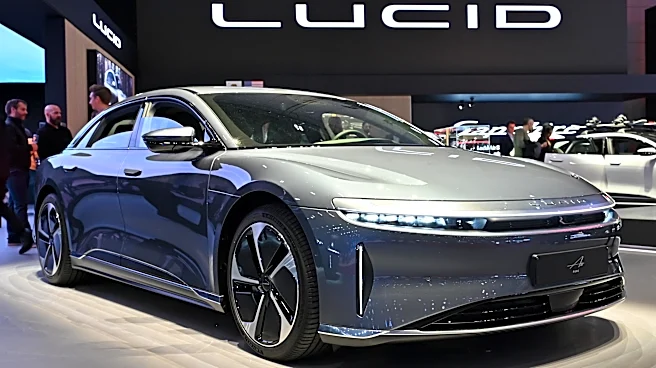
Citigroup significantly adjusted its automotive stock portfolio in the third quarter, according to a new filing. The firm more than doubled its stake in Lucid (LCID) by increasing its holdings by 106% to 4.25 million shares from 2.06 million at the end
of the second quarter. Despite this increase in shares, the position's value only climbed about 25% to $17.3 million due to a drop in the stock price during the period. Citigroup also raised its stake in Rivian (RIVN) by 39.7% to 8.56 million shares, partially reversing a cut made in the second quarter. Additionally, the firm increased its Tesla (TSLA) common-stock holding by 10.1% to 8.69 million shares, valued at approximately $3.09 billion at quarter-end. Conversely, Citigroup sold its small stake in Faraday Future and reduced its holdings in several other automakers, including an 82.6% cut in XPeng (XPEV) and a 5% reduction in General Motors (GM).
Why It's Important?
Citigroup's strategic rebalancing of its automotive portfolio signals a notable shift in investment focus within the electric vehicle (EV) sector and the broader automotive industry. The substantial increase in stakes in U.S.-based EV manufacturers like Lucid, Rivian, and Tesla suggests a bullish outlook on these companies' long-term growth potential and their position in the evolving market. This move could be interpreted as a vote of confidence in the domestic EV market, potentially influencing other institutional investors and retail traders. The reduction in holdings of Chinese EV makers like XPeng and traditional automakers such as General Motors indicates a potential reallocation of capital towards companies perceived to have stronger future prospects or better alignment with current market trends. This could impact the stock performance of both the favored and disfavored companies, affecting their market capitalization and access to capital for future development.
What's Next?
The impact of Citigroup's portfolio adjustments will likely be closely watched by investors and analysts. The increased institutional backing for Lucid, Rivian, and Tesla could contribute to positive market sentiment and potentially influence their stock performance in the coming quarters. For Lucid, this comes ahead of its third-quarter results, which analysts anticipate will show improvements in both top and bottom lines. The reduced stakes in XPeng and General Motors might lead to increased scrutiny of their performance and strategic direction. Future filings from other major investment firms will reveal whether this trend of favoring U.S. EV manufacturers is widespread or specific to Citigroup's investment strategy. The broader implications for the competitive landscape between U.S. and Chinese EV markets, as well as between EV startups and legacy automakers, will continue to unfold.
Beyond the Headlines
Citigroup's investment decisions reflect a deeper narrative about the future of the automotive industry, particularly the accelerating transition to electric vehicles. The firm's increased commitment to companies like Lucid and Rivian, which are still in relatively early stages of scaling production, highlights the perceived long-term value and disruptive potential of pure-play EV manufacturers. This strategic shift also underscores the growing importance of environmental, social, and governance (ESG) factors in investment decisions, as EVs are central to global decarbonization efforts. The move away from some Chinese EV makers could also reflect geopolitical considerations or a reassessment of market dynamics in different regions. Ultimately, these investment patterns contribute to shaping the capital allocation landscape, influencing which companies have the resources to innovate and lead in the next generation of transportation.