


What's Happening?
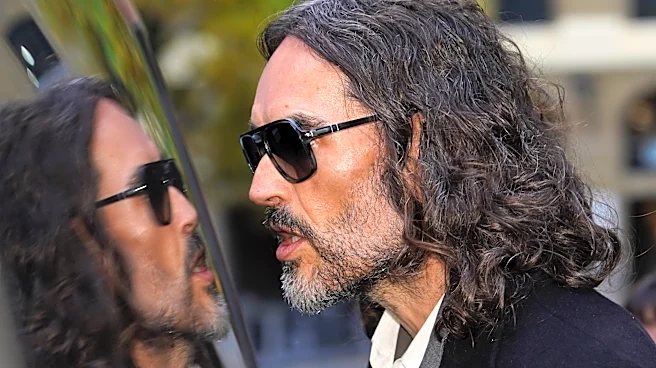
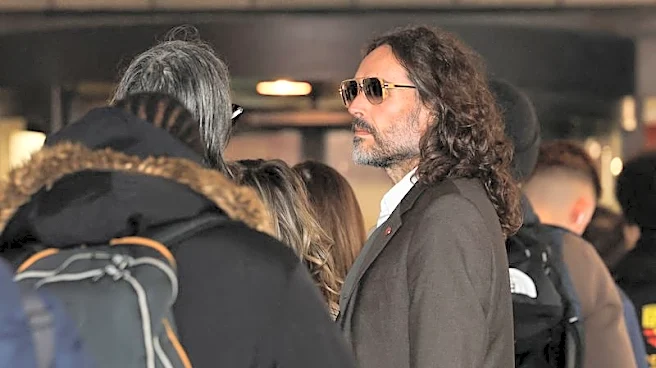
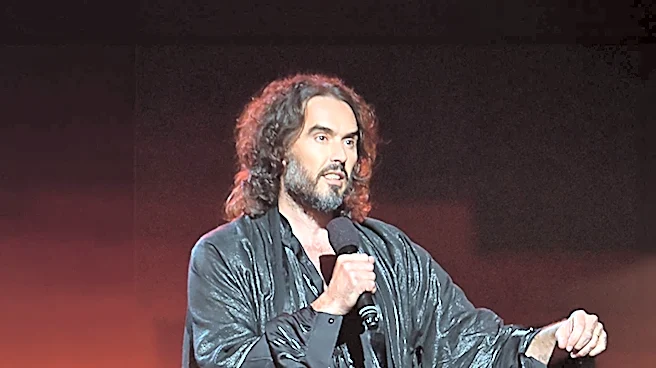
Russell Brand, in his 2007 memoir, implied that pop star Kylie Minogue was partly responsible for his firing from MTV six years prior. Brand recounted inviting his drug dealer and the dealer's eight-year-old child to the TV show's set, where he and the dealer smoked
crack. He claimed that Minogue then had an 'awkward chat' with the dealer during a studio tour, leading to his dismissal two days later. However, the source highlights that Brand omitted a crucial detail: his firing occurred on September 12, 2001, and he had shown up to work dressed as Osama bin Laden. This context suggests that his attire and drug use, rather than an interaction involving Minogue, were the more likely reasons for his termination. Brand has a history of reframing past events, including his actions as a crack and heroin addict and allegations concerning a relationship with a teenager.
Why It's Important?
This story is important as it sheds light on the selective narrative control often employed by public figures, particularly when facing scrutiny or attempting to rehabilitate their image. Brand's account, as presented in his memoir, deflects responsibility and subtly implicates another celebrity, Kylie Minogue, in his professional downfall. The omission of his controversial attire on a highly sensitive date (September 12, 2001) demonstrates an attempt to minimize the severity of his actions and reshape public perception. This practice can mislead audiences and distort the true circumstances of events, impacting how individuals are judged and held accountable. It also underscores the media's role in scrutinizing and challenging such narratives to ensure a more complete and accurate understanding of public figures' past behaviors.
What's Next?
The ongoing re-evaluation of Russell Brand's past actions and statements, particularly in light of recent legal developments, suggests a continued public and media focus on his narrative control. As more allegations and details emerge, there will likely be further scrutiny of his previous explanations for various incidents, including his MTV sacking. This could lead to a broader re-assessment of his career and public persona. Media outlets and commentators may continue to highlight discrepancies between his self-portrayal and documented facts, potentially impacting his future professional opportunities and public standing. The public's perception of Brand will likely continue to evolve as more information comes to light and his past statements are critically examined.
Beyond the Headlines
This incident highlights the broader issue of celebrity accountability and the power of narrative in shaping public opinion. Celebrities often have significant platforms to craft their own stories, which can sometimes obscure or downplay problematic behaviors. Brand's attempt to shift blame and omit critical details from his memoir raises ethical questions about the responsibility of public figures to present accurate accounts of their past. It also underscores the importance of media literacy and critical thinking for audiences, who must discern between carefully constructed narratives and factual reporting. The long-term implications could include a greater demand for transparency from public figures and a more rigorous approach by media in fact-checking and contextualizing celebrity memoirs and public statements.