




What's Happening?
A joint analysis by Korea Maritime & Ocean University’s Green Ship Technology Laboratory (KMOU GSTL), University College London (UCL), and RMI, with complementary research from Japan's Institute for Global Environmental Strategies (IGES), indicates that
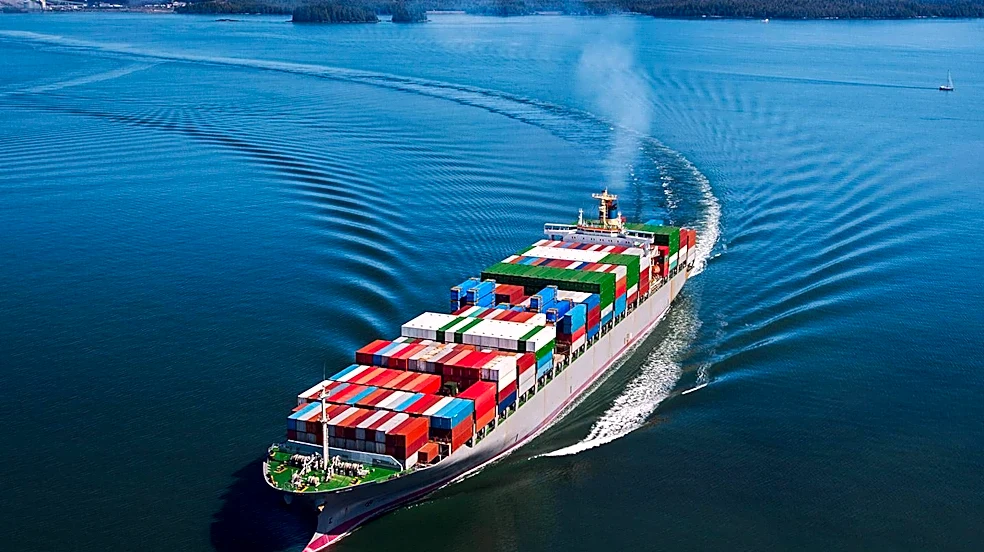
delaying investment in zero-emissions vessels significantly increases lifetime costs for shipowners. Specifically, if a vessel order and delivery are postponed from 2029 to 2032, shipowners could face 33% to 97% higher lifetime costs. This research was conducted in the context of the International Maritime Organization (IMO) weighing the adoption of its Net-Zero Framework, a decision that was deferred from October 2025 to December 2026. The study found that under the IMO’s proposed framework, ships burning fossil fuels would be 19-76% more expensive over their lifetime, while vessels capable of running on green fuels like ammonia or methanol could be 14-28% cheaper to operate. Lower financing costs are also identified as a critical factor in accelerating the transition to green fuels.
Why It's Important?
This research highlights the urgent economic imperative for the global shipping industry, including U.S. stakeholders, to transition to green fuels. Delays in adopting zero-emission technologies will not only incur higher operational costs for shipowners but also impact the competitiveness of maritime trade. For the U.S., which relies heavily on maritime shipping for its imports and exports, these increased costs could translate into higher prices for goods, affecting consumers and businesses. Furthermore, the findings underscore the need for supportive policies and financing mechanisms to facilitate this transition, as lower financing costs can make green vessels economically attractive sooner. The U.S. maritime sector, including shipbuilders, operators, and port authorities, stands to gain from early investment in green technologies and supportive regulatory frameworks, ensuring its long-term viability and alignment with global decarbonization goals.
What's Next?
The International Maritime Organization (IMO) is expected to reconsider the adoption of its Net-Zero Framework in November and December. This decision will be crucial in providing market certainty for shipowners and driving investment in green technologies. Following the research, discussions are ongoing within Korea's maritime sector, involving shipowners, shipbuilders, and port stakeholders, about the challenges faced by smaller operators in renewing their fleets and the necessary policy and financing support. Pacific Environment plans to continue collaborating with international policymakers, shipowners, and maritime leaders to establish a long-term pathway to zero-emissions shipping. The focus will be on creating complementary domestic policies that reduce financing and upfront investment barriers, enabling shipping companies, including small and medium-sized enterprises, to invest in the next generation of green vessels.
Beyond the Headlines
The economic analysis of delaying green fuel adoption extends beyond mere cost savings, touching upon broader environmental and strategic implications. The maritime industry is a significant contributor to global greenhouse gas emissions, and a slow transition to zero-emission fuels exacerbates climate change impacts. Ethically, the delay raises questions about corporate responsibility and the industry's commitment to sustainability. Strategically, nations that lead in developing and adopting green maritime technologies could gain a competitive advantage in the future global shipping landscape. For the U.S., this presents an opportunity to invest in research and development for alternative marine fuels and propulsion systems, fostering innovation and creating new economic sectors. The long-term shift could see a complete overhaul of global shipping infrastructure, with new fuel bunkering facilities, vessel designs, and operational practices becoming standard, driven by both economic necessity and environmental mandates.