



What's Happening?
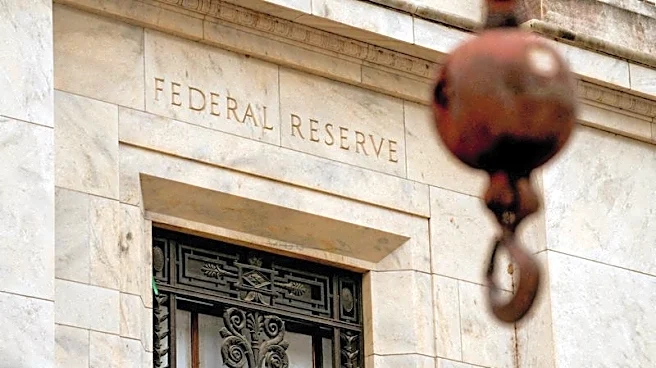
Federal Reserve Governor Michael Barr has issued a warning regarding the substantial debt accumulating in the artificial intelligence (AI) sector. In a speech delivered in Milan on November 16, Barr highlighted that the seven largest AI-related companies
are projected to hold over US$800 billion in on-balance-sheet debt by the end of 2026. Furthermore, he noted that the maximum nominal value of off-balance-sheet obligations, including long-term contracts, leasing commitments, and financial guarantees, exceeds US$3 trillion. These figures represent significant contractual commitments whose economic viability hinges on future demand and profitability within the AI industry. The Federal Reserve's October 27–28 monetary policy meeting minutes also revealed growing concerns among policymakers about the potential consequences of a sharp reversal in investor confidence towards AI, particularly given the rapid expansion of AI-related debt through complex financing structures and concentrated financial exposure among a few companies.
Why It's Important?
This warning from Federal Reserve Governor Michael Barr is crucial for the U.S. economy and global financial stability. The immense debt associated with AI investments, totaling trillions of dollars, could pose a systemic risk if the anticipated returns on these investments do not materialize. A downturn in investor confidence or a failure of AI businesses to generate expected profits could trigger financial shocks that ripple through the broader economy. The situation draws parallels to the 2008 financial crisis, where complex financial instruments obscured interconnected risks. While the underlying assets are different—AI infrastructure instead of housing—the potential for a domino effect, where a reassessment of an entire investment sector leads to widening corporate bond spreads, losses in private credit portfolios, and forced selling by leveraged investment funds, is a significant concern. This could impact U.S. financial markets, investment funds, and the overall economic landscape, affecting businesses and individuals reliant on stable financial conditions.
What's Next?
The Federal Reserve and other financial regulators will likely continue to monitor the AI investment landscape closely, assessing the sustainability of the accumulated debt and the potential for financial contagion. Policymakers may consider measures to enhance transparency in AI financing structures and encourage prudent borrowing practices within the industry. Businesses and investors involved in the AI sector will need to carefully evaluate their exposure to these financial commitments and assess the long-term profitability of AI technologies. The ongoing dialogue among central banks, including the European Central Bank, suggests a coordinated effort to understand and mitigate potential risks. The focus will be on whether the demand for artificial intelligence can justify the extraordinary capital expenditure and if the financial foundations supporting this technological transformation can remain stable.
Beyond the Headlines
The concerns raised by Federal Reserve Governor Michael Barr extend beyond immediate financial stability, touching upon the ethical and long-term implications of rapid technological advancement fueled by massive debt. The comparison to past speculative bubbles, such as the dot-com crash, highlights a recurring pattern where revolutionary technologies attract enormous investment, sometimes leading to significant investor wealth destruction even if the technology ultimately proves transformative. This situation prompts a deeper look into the balance between technological optimism and financial prudence. It also raises questions about the concentration of wealth and risk within a few dominant AI companies and the potential for circular financing arrangements to obscure true financial dependencies. The challenge lies in fostering innovation and leveraging the benefits of AI without creating systemic vulnerabilities that could undermine economic stability and public trust in the financial system.