






What's Happening?
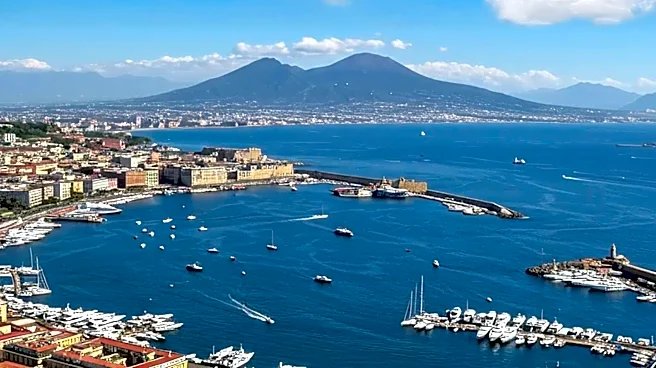
Paolo Sorrentino's film 'The Hand of God' prominently features the city of Naples, transforming it into a backdrop that explores themes of family, longing, football, and the protagonist's discovery of cinema. Key public spaces in Naples, such as Galleria
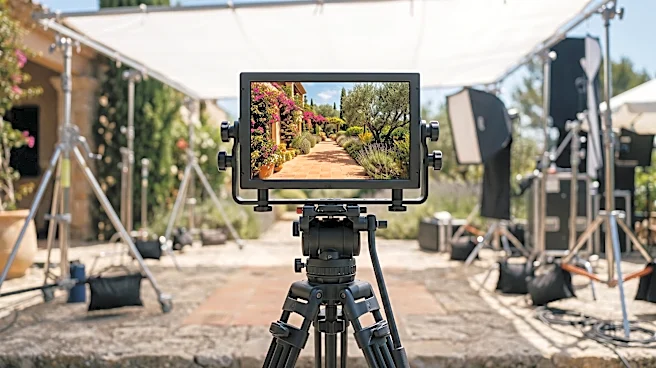
Umberto I and Piazza del Plebiscito, are utilized repeatedly throughout the film. Galleria Umberto I, with its glass roof and intersecting arcades, serves as a significant and recurring location. Piazza del Plebiscito appears in an early nighttime sequence, with the film recreating its 1980s appearance, including period-appropriate parked cars. The film also demonstrates how different locations can be combined through editing to create a seamless on-screen environment, such as the courtyard of Palazzo Zapata and an interior at Villa del Cardinale in Torre del Greco being presented as neighboring spaces. This cinematic approach highlights how filmmaking can rearrange and reinterpret real-world locations to serve the narrative.
Why It's Important?
The use of Naples in 'The Hand of God' is important as it showcases how a specific urban environment can become an integral character in a film, influencing the narrative and emotional depth. For the U.S. audience, this provides a cultural window into Italian life and architecture, potentially fostering interest in international cinema and travel. The film's success in weaving the city's fabric into its story can inspire other filmmakers to explore unique geographical settings, enriching the global cinematic landscape. Furthermore, it underscores the power of cinema to transform familiar places into symbolic spaces, offering viewers a deeper connection to the story's themes. The film's portrayal of Naples also contributes to the city's cultural identity on a global stage, potentially boosting tourism and cultural exchange.
What's Next?
While the source does not explicitly detail future plans for 'The Hand of God' in the U.S., the film's critical acclaim and its director's international recognition suggest continued availability on streaming platforms and potential for academic study in film programs. The film's success may also encourage U.S. distributors to acquire and promote more international films that feature strong geographical elements. For Naples, the film's exposure could lead to increased cultural tourism, with visitors seeking out the iconic locations depicted. Future projects by Paolo Sorrentino are likely to be anticipated by U.S. audiences and critics, given his established reputation for visually rich and emotionally complex storytelling.
Beyond the Headlines
Beyond its immediate cinematic impact, 'The Hand of God' offers a deeper reflection on the interplay between personal memory and public spaces. The film's ability to evoke a specific era in Naples through its visual storytelling highlights the cultural significance of urban landscapes in shaping individual and collective identities. It subtly explores how personal narratives are often intertwined with the physical environments in which they unfold, making the city more than just a backdrop but an active participant in the protagonist's journey of self-discovery. This artistic choice can prompt viewers to consider their own connections to the places they inhabit and how these environments influence their life stories, adding a layer of introspective engagement beyond mere entertainment.