






What's Happening?
The Government Accountability Office (GAO) has called on Congress to re-evaluate the oversight of investor disclosures for publicly traded banks that do not operate with holding companies. The GAO report highlights that these institutions are not subject
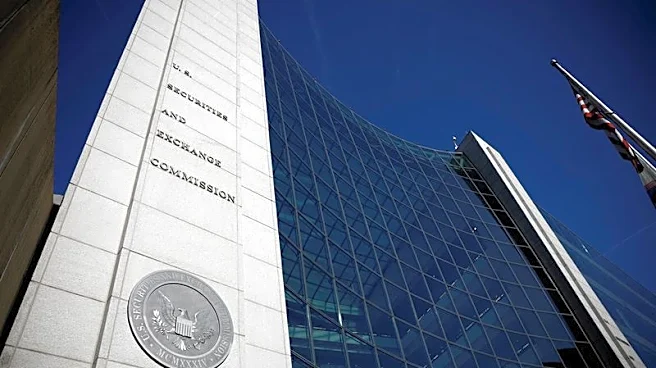
to the same investor-focused scrutiny from the Securities and Exchange Commission (SEC) as most other public companies. Currently, eleven public banks, including two with assets exceeding $80 billion, have their disclosures reviewed by federal banking regulators rather than the SEC. These regulatory reviews do not specifically prioritize the interests of investors. The GAO cited the 2023 failures of First Republic Bank and Signature Bank, both of which operated without holding companies, leading to over $29 billion in shareholder losses. The report also noted that none of the three banks reviewed, including Silicon Valley Bank, disclosed breaches of internal interest-rate or liquidity-risk limits or how management addressed these breaches. The GAO recommended that the SEC provide guidance on determining the materiality of such breaches to investors, a suggestion the SEC disagreed with, stating it offers feedback after disclosures when necessary.
Why It's Important?
This oversight gap poses significant risks to investors and the stability of the financial system. The lack of SEC scrutiny for banks without holding companies means that critical information relevant to investor decisions might not be adequately disclosed or reviewed from an investor protection standpoint. The failures of First Republic Bank and Signature Bank, which resulted in substantial shareholder losses, underscore the potential consequences of this regulatory disparity. If investors are not fully informed about a bank's financial health, particularly regarding breaches of internal risk limits, they cannot make sound investment decisions. This situation could lead to unexpected market volatility and erode investor confidence in the banking sector. The GAO's recommendation aims to standardize disclosure requirements and ensure that all publicly traded banks are held to a consistent level of transparency, thereby protecting shareholders and promoting greater financial stability.
What's Next?
The GAO's recommendation places the onus on Congress to reassess the authority for reviewing investor disclosures from publicly traded banks without holding companies. This could lead to legislative action aimed at closing the identified oversight gap, potentially shifting disclosure review responsibilities to the SEC or mandating more stringent investor-focused reviews by federal banking regulators. The SEC's disagreement with providing public guidance on materiality suggests that any changes would likely require congressional intervention rather than internal SEC policy adjustments. Stakeholders, including investor advocacy groups and financial industry associations, will likely monitor congressional discussions closely. The outcome could influence future regulatory frameworks for banks, potentially leading to increased compliance burdens for institutions currently operating without holding companies and enhanced protections for investors in the banking sector.
Beyond the Headlines
The issue extends beyond mere regulatory jurisdiction, touching upon the fundamental principles of investor protection and market transparency. The distinction in oversight based on a bank's corporate structure—whether it has a holding company or not—creates an uneven playing field and a potential loophole in financial regulation. This situation highlights a broader challenge in financial oversight: adapting regulations to evolving corporate structures and market practices to ensure consistent protection for all stakeholders. The GAO's findings suggest that the current regulatory framework may not be sufficiently agile to address all forms of systemic risk, particularly those arising from less conventional banking structures. Addressing this gap could set a precedent for how regulators approach other areas where corporate structures might inadvertently create regulatory blind spots, ultimately aiming for a more robust and equitable financial system.