






What's Happening?
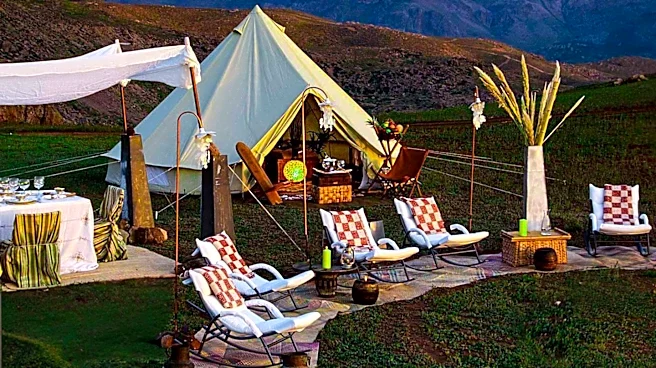
A recent trend in hiking trips involves utilizing glamping trailers as a hybrid basecamp, offering a balance between the ruggedness of camping and the comfort of a hotel. This approach allows hikers to establish a semi-permanent base in scenic areas,
from which they can embark on day hikes. One individual recounted a four-day trip to Moab, Utah, where a rented teardrop trailer was delivered directly to a campsite. This setup provided amenities such as a queen-sized bed, integrated chargers, electricity, and heat, along with a full kitchen setup. The cost for a three-night stay, including the trailer rental and campsite fees, was approximately $150 per night, which was noted to be less expensive than many hotels in the area. This method enables hikers to undertake high-mileage day hikes while returning to a comfortable and well-equipped base each evening, enhancing recovery and overall enjoyment.
Why It's Important?
This emerging trend of using glamping trailers for hiking basecamps holds significant implications for the U.S. outdoor recreation industry and lifestyle choices. It broadens the appeal of hiking to individuals who desire more comfort than traditional tent camping offers but still seek immersion in nature, potentially attracting a new demographic to national parks and wilderness areas. For the tourism sector, particularly in regions rich with hiking trails like Moab, Utah, it creates new revenue streams through trailer rentals and associated services. It also presents an alternative to traditional lodging, potentially alleviating pressure on hotels during peak seasons. Economically, this hybrid model supports local businesses that provide rental services, campsite facilities, and other tourist amenities. Furthermore, it promotes a more sustainable form of tourism by encouraging longer stays in one area, reducing the environmental impact associated with frequent travel between different accommodations. This approach allows for deeper exploration of specific regions while maintaining a higher level of personal comfort and convenience.
What's Next?
The popularity of glamping trailers as hiking basecamps is expected to grow, leading to an expansion of rental services and dedicated campsites across the U.S. Companies like Red Rocks Base Camps, Rvezy, Outdoorsy, and RVshare are likely to see increased demand, potentially prompting more individual owners to offer their trailers for rent. This could lead to the development of more specialized glamping sites designed to cater to hikers, offering amenities tailored to their needs. We may also see an increase in guided 'basecamp' hiking tours that incorporate these comfortable accommodations. As this trend evolves, there could be a greater emphasis on sustainable practices within the glamping industry to minimize environmental impact. Local communities near popular hiking destinations may need to adapt their infrastructure to support the influx of glamping enthusiasts, including managing campsite availability and trail access. The continued innovation in trailer design, focusing on lightweight and amenity-rich options, will also be a key development.
Beyond the Headlines
The rise of glamping trailers for hiking basecamps reflects a broader cultural shift towards experiential travel that prioritizes both adventure and comfort. It challenges the traditional dichotomy between 'roughing it' in the wilderness and luxurious getaways, creating a middle ground that appeals to a diverse range of outdoor enthusiasts. This trend also highlights the increasing demand for convenience and personalized experiences in leisure activities, as evidenced by services that deliver trailers directly to campsites. Ethically, it raises questions about accessibility to nature, as glamping offers a more inclusive option for individuals who might otherwise be deterred by the physical demands or discomforts of traditional camping. However, it also prompts discussions about the potential for increased human impact on natural environments if not managed responsibly. The integration of technology, such as integrated chargers and heating in trailers, underscores how modern conveniences are increasingly becoming part of the outdoor experience, blurring the lines between urban living and wilderness exploration.