


What's Happening?
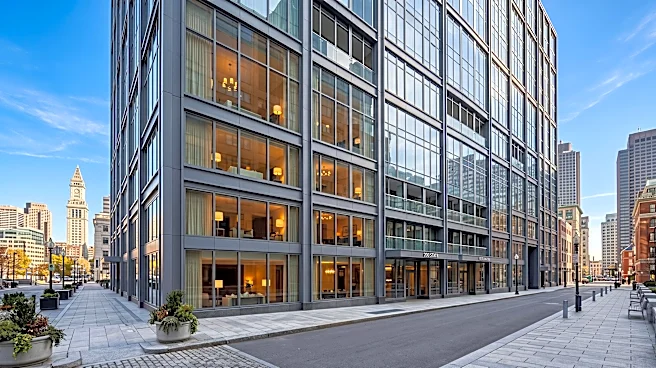
The Boston Planning Department has approved several new developments, including significant office-to-residential conversions, to address the city's housing needs. Among the approved projects is Vanbarton Group's 476-unit conversion of an office building
at 31 St. James Ave. in the Back Bay. Additionally, Ruben Cos., a New York-based real estate investment firm, has proposed converting a portion of the first floor and all of the second through eighth floors of an office building at 250 Washington St. into 98 housing units. This initiative aligns with the city's program to encourage such conversions. The Boston Planning Department's recent approvals encompass six new developments totaling 774,000 square feet, which will collectively add 657 housing units to the city. These actions are part of a broader strategy to increase housing availability in Boston.
Why It's Important?
These office-to-residential conversions are crucial for Boston's urban development and housing market. By repurposing underutilized office spaces, the city can efficiently increase its housing stock without requiring new land development, which is often scarce and expensive in urban centers. This strategy helps alleviate pressure on housing prices and provides more options for residents. The approval of projects like the 476-unit conversion by Vanbarton Group and the proposed 98-unit conversion by Ruben Cos. demonstrates a proactive approach by the Boston Planning Department to adapt to changing urban needs. This trend could also revitalize downtown areas by bringing more residents into commercial districts, fostering a more vibrant and active urban environment beyond traditional business hours. The economic viability of such conversions, as noted by experts like Keith DeMatteis in other contexts, depends on factors such as building geometry and structural constraints, making each project a unique undertaking.
What's Next?
Following these approvals, the developers will proceed with the detailed planning and construction phases of the office-to-residential conversions. The city's continued support for such projects, including Mayor Michelle Wu's proposed changes to inclusionary development and linkage fees to spur housing development, indicates a sustained effort to expand housing options. Other cities, such as Hartford and Stamford, are also exploring similar conversion strategies, suggesting a growing trend in urban planning across the U.S. The success of these projects in Boston could serve as a model for other municipalities facing similar housing challenges, potentially leading to more widespread adoption of office-to-residential conversion programs. Future developments will likely focus on the practical execution of these conversions and their impact on the local housing market and urban landscape.
Beyond the Headlines
The shift from office to residential spaces reflects a broader economic and societal transformation, particularly in the wake of evolving work patterns and the demand for urban living. This trend highlights the adaptability of urban infrastructure and the potential for creative solutions to housing shortages. Beyond the immediate impact on housing supply, these conversions can contribute to environmental sustainability by reusing existing structures rather than engaging in new construction, which often has a larger carbon footprint. Furthermore, the integration of residential units into formerly commercial zones can lead to more mixed-use neighborhoods, fostering greater community interaction and reducing reliance on single-purpose districts. This evolution could redefine the character of urban centers, making them more resilient and responsive to the needs of their populations.