

What's Happening?
Birdie, a two-year-old French bulldog with paralyzed back legs due to Intervertebral Disc Disease (IVDD), has found a loving home in Salt Lake City after being surrendered to Best Friends Animal Sanctuary in Kanab, Utah. Birdie's previous owners could
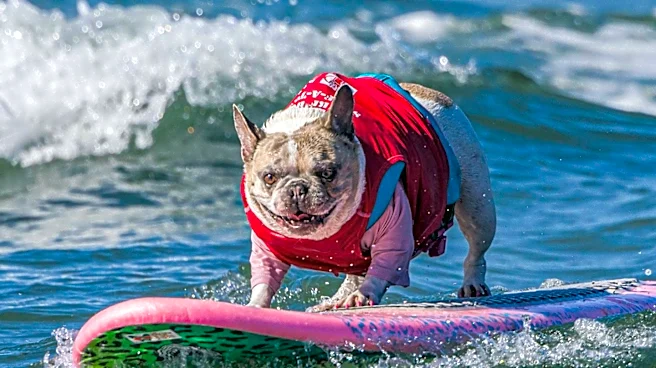
no longer manage her medical needs after she lost feeling in her back end following a jump from a couch. Best Friends Animal Sanctuary provided her with a custom wheelchair and physical therapy to build her strength. Recognizing her better chances of adoption in a larger city, Birdie was moved to the Best Friends Pet Adoption Center in Salt Lake City. Mindy Hodges, who was not actively seeking a dog, was captivated by Birdie's online photo and adopted her. Birdie, who was also debarked before coming to the sanctuary, now enjoys an active life with her new family, including paddleboarding.
Why It's Important?
Birdie's story highlights the resilience of animals with special needs and the profound impact of dedicated rescue organizations like Best Friends Animal Society. It underscores the importance of individualized care for pets with health challenges, demonstrating that conditions like IVDD do not preclude a full and joyful life. The narrative also brings attention to the high prevalence of IVDD in breeds like French Bulldogs, raising awareness about responsible breeding practices and the potential health issues associated with certain breed characteristics. Furthermore, the successful adoption of a special needs pet challenges common misconceptions and encourages potential adopters to consider animals that might otherwise be overlooked, thereby increasing adoption rates for a vulnerable population in shelters.
What's Next?
Birdie will continue to thrive in her new home, receiving ongoing care for her IVDD and incontinence, which her family manages with dedication. Her story is likely to continue inspiring others to consider adopting special needs pets and to support animal welfare organizations. Best Friends Animal Society and similar organizations will continue their efforts to rescue, rehabilitate, and rehome animals, including those with special needs. There will likely be continued advocacy for responsible breeding practices to reduce the incidence of genetic conditions like IVDD in popular breeds. The Hodges family's experience may also encourage more people to volunteer, foster, or donate to animal shelters, recognizing the significant resources required to care for special needs animals.
Beyond the Headlines
Birdie's journey transcends a simple adoption story, touching on deeper ethical and societal issues. The fact that she was debarked before entering the sanctuary raises concerns about inhumane practices and the ethical treatment of animals. Her ability to adapt and find joy despite her physical challenges and past experiences speaks to the incredible spirit of animals. The Hodges family's willingness to embrace the responsibilities of caring for a special needs pet, including managing incontinence and mobility issues, exemplifies unconditional love and compassion. This narrative can foster a broader conversation about the value of all lives, regardless of physical limitations, and challenge the consumerist mindset often associated with pet acquisition. It also highlights the critical role of animal sanctuaries and adoption centers in providing a second chance for animals facing significant hurdles.