






What's Happening?
Amazon CEO Andy Jassy has articulated a vision for Amazon Web Services (AWS) to become a trillion-dollar annual revenue business, emphasizing its potential for significant free cash flow and return on invested capital. This projection comes as AWS reported
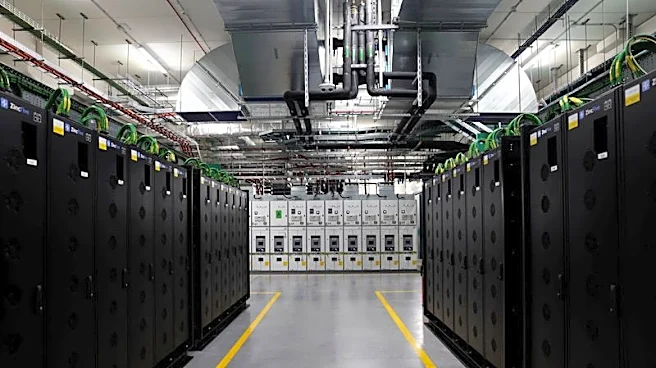
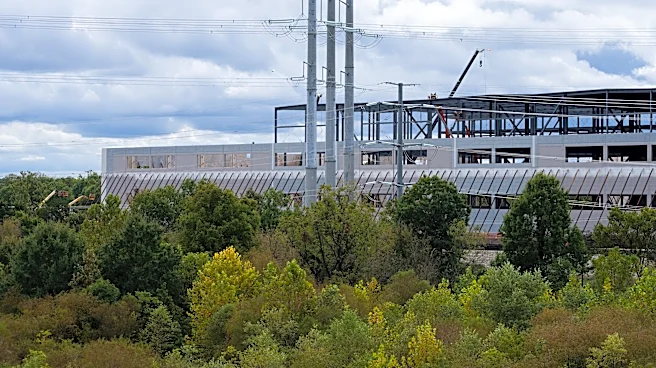
a 37% surge in revenue to $42 billion in Q2, marking its fastest growth in 18 quarters. The company currently holds a $496 billion backlog, with much of its 2027 capacity already reserved by customers. Amazon is committing substantial capital expenditures, roughly $200 billion for 2026, to expand its AI data center infrastructure. This investment strategy is based on the premise that current spending on productive assets like data centers, chips, and servers will generate long-term value and future free cash flow. Despite a trailing free cash flow of -$7.6 billion and a near doubling of long-term debt to $119.1 billion, management believes these investments are crucial for future growth, especially given that 85% of global IT spending remains on-premises, indicating a vast potential for cloud migration.
Why It's Important?
This strategic outlook from Amazon's CEO highlights a significant shift in the technology and cloud computing landscape, underscoring the immense growth potential within the AI and cloud infrastructure sectors. If AWS achieves a trillion-dollar annual revenue, it would solidify Amazon's position as a dominant force in the global economy, impacting competition, innovation, and market dynamics across various industries. The substantial capital expenditure commitment signals a long-term investment in foundational technology, which could drive advancements in AI capabilities and cloud services for businesses worldwide. This aggressive expansion could also intensify competition among hyperscalers like Microsoft Azure and Google Cloud, potentially leading to more competitive pricing and innovative offerings for consumers and enterprises. Furthermore, the focus on building out data centers and related infrastructure creates opportunities for companies involved in power, cooling, and networking, as these are critical components for supporting the AI boom. The investment strategy also reflects a broader economic trend where companies are prioritizing asset building for future returns, even if it temporarily impacts free cash flow.
What's Next?
Amazon's immediate next steps involve continuing its aggressive investment in AI data center expansion, with plans to double power capacity by the end of 2027 compared to 2025. Investors will closely monitor whether the reserved capacity translates into actual revenue as new data centers come online. The company's Q3 operating income guidance of $22.5 billion to $26.5 billion will be a key indicator of its short-term financial performance and the effectiveness of its investment strategy. The ongoing competition with Microsoft Azure and Google Cloud will likely intensify, with each company vying for market share in the rapidly expanding cloud and AI sectors. Amazon's ability to manage its increasing long-term debt while generating sufficient free cash flow from its new assets will be critical for its financial health. The success of this strategy will also depend on sustained demand for AI and cloud services, as a cooling of demand could leave Amazon with expensive, underutilized infrastructure. The market will be watching for further announcements regarding customer commitments and the operational efficiency of these new facilities.
Beyond the Headlines
The ambitious projection for AWS extends beyond mere financial targets, hinting at profound shifts in how businesses operate and innovate. The massive investment in AI infrastructure suggests a future where AI-driven services become even more ubiquitous, potentially transforming industries from healthcare to finance. This expansion could also raise questions about energy consumption and environmental impact, as data centers require significant power and cooling, prompting discussions around sustainable practices in the tech industry. Furthermore, the concentration of cloud computing power in the hands of a few hyperscalers like Amazon could lead to debates about market dominance, data privacy, and regulatory oversight. The long-term implications include the potential for increased technological dependence on these platforms, influencing everything from national security to economic resilience. The strategy also highlights a broader economic philosophy where upfront, large-scale capital investment in foundational technology is seen as a prerequisite for future growth and market leadership, potentially setting a new standard for corporate investment in the digital age.