









What's Happening?
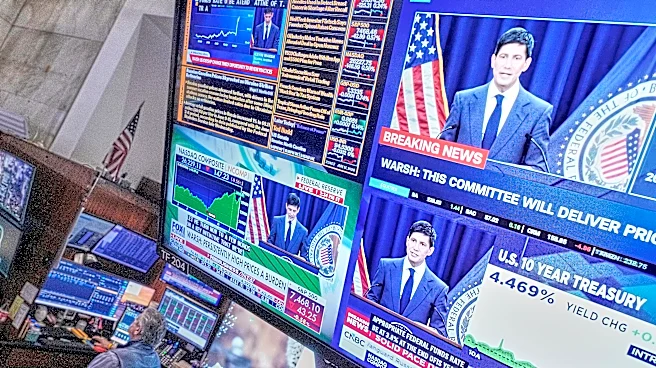
Goldman Sachs has highlighted bond puts as effective hedges against potential rate shocks, amid rising uncertainty over the Federal Reserve's policy direction under Chairman Kevin Warsh. Following a hawkish Federal Open Market Committee meeting, concerns
have increased regarding the outlook for short-term interest rates. Bond puts, which gain value when bond prices fall and interest rates rise, are seen as a way for investors to mitigate losses if borrowing costs unexpectedly increase. Goldman Sachs noted that while a sharp repricing of rates is not their base case, the most attractive hedges in a renewed policy or rates shock scenario include investment-grade bond puts and long-dated payer options in both euros and dollars. The bank also mentioned that lower oil prices have eased inflation concerns, reducing the probability of a U.S. recession over the next 12 months to 15% from 25%. Despite this, short-term Treasury yields remain elevated, with the two-year yield around 4.22%.
Why It's Important?
The identification of bond puts as a hedge by Goldman Sachs is significant for investors navigating the current economic landscape. With the Federal Reserve's policy path uncertain, investors face potential volatility in interest rates, which can impact portfolios. By using bond puts, investors can protect against losses from rising borrowing costs. This strategy is particularly relevant as markets adjust to the possibility of sustained elevated rates. The broader impact includes potential shifts in investment strategies, as stakeholders reassess risk management approaches in light of evolving economic conditions. The reduced probability of a recession, due to easing oil prices, also influences market sentiment, potentially stabilizing certain sectors while maintaining caution in others.
What's Next?
Investors and market participants will likely continue to monitor Federal Reserve communications and economic indicators closely, as these will influence interest rate expectations and market volatility. The strategies outlined by Goldman Sachs may see increased adoption as stakeholders seek to hedge against potential rate shocks. Additionally, the ongoing assessment of inflation trends and economic growth will play a crucial role in shaping future monetary policy decisions. As the market adapts to these dynamics, further adjustments in investment strategies and risk management practices are anticipated.